

Securing a kickass website domain is an essential for any purpose-driven business, and it’s one of the first steps that Akepa successfully took just a few short years ago. With that in mind, we’re here to offer some indispensable tips to help you through this superficially simple but byzantine process.
It’s very easy to take a wrong turn – meaning damage to the brand instead of a boost at a critical early juncture. And in the sustainability sector, where transparency and credibility are everything, early preparation is even more vital. Booking your domain early makes sure your digital identity is locked-in before competitors or opportunistic domain flippers claim it, providing the stable online roots that your purposeful brand can grow from.
Before you get going, it’s worth understanding the subtleties of the green digital space. Positioning your brand impactfully starts with a domain that reflects your environmental values
Why early domain registration matters for green brands
In the sustainability space, the most intuitive and impactful names – those involving terms like “eco,” “green,” “sustainable”, “solar,” or “circular” – are in excruciatingly high demand. By acting swiftly, you can secure a snappy, memorable address that vibes with eco-conscious folk who’re keen to follow your mission. For those playing the long game, acting early prevents the risk of having to use a clunky, complicated URL that might water down your message.
In short, this is a process that deserves speed but not haste.
Ten steps to secure the right domain for your purpose-driven project
1. Identify a brandable, mindful name
Your brand name, and by extension your domain name, should be connected to your mission’s purpose. While it needs to be simple and easy to type, it should also evoke your area of impact. Avoid jargon or long-winded waffle; instead, aim for relevance in a clean, minimalist way. A catchy, easy-to-remember and easy-to-say name increases the likelihood of word-of-mouth growth within the community. The classic advice of sticking to no more than three syllables has aged pretty well – and with a domain name you should aim at under 20 characters.
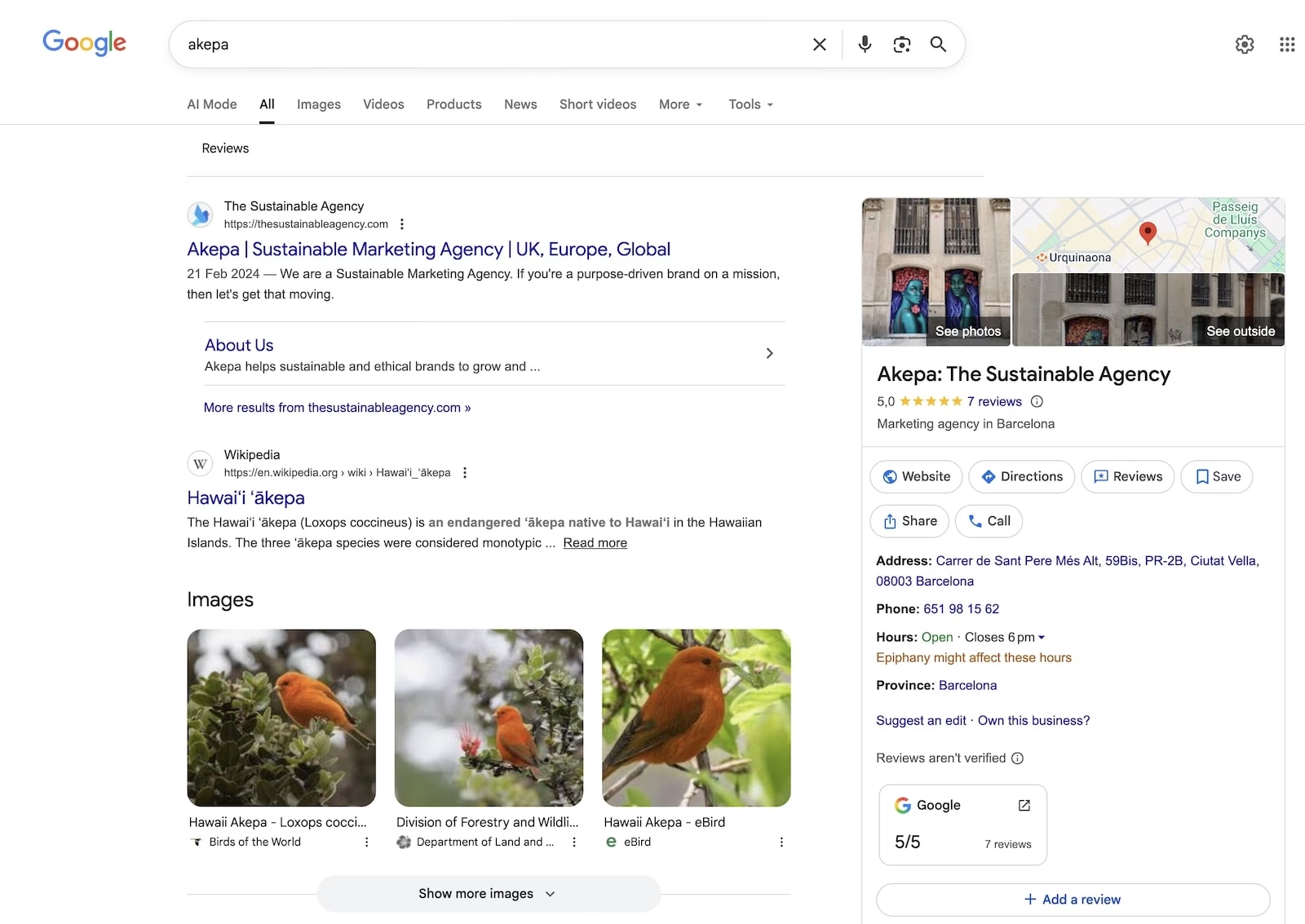
In our case, we chose akepa as our brand name because it’s snappy, short, easy to pronounce, has a story behind it (the Hawaiʻi ʻākepa is an endangered bird) and there were no other organisations using the same name. As a result, it has been easier for us to stand out in Google when people search for the brand. It has never been awkward to tell people what our company is called. We can tell a compelling story about the name. One of the other names on the shortlist was Taumau and we’re delighted we passed that one over.
2. Consider impact-oriented domain extensions
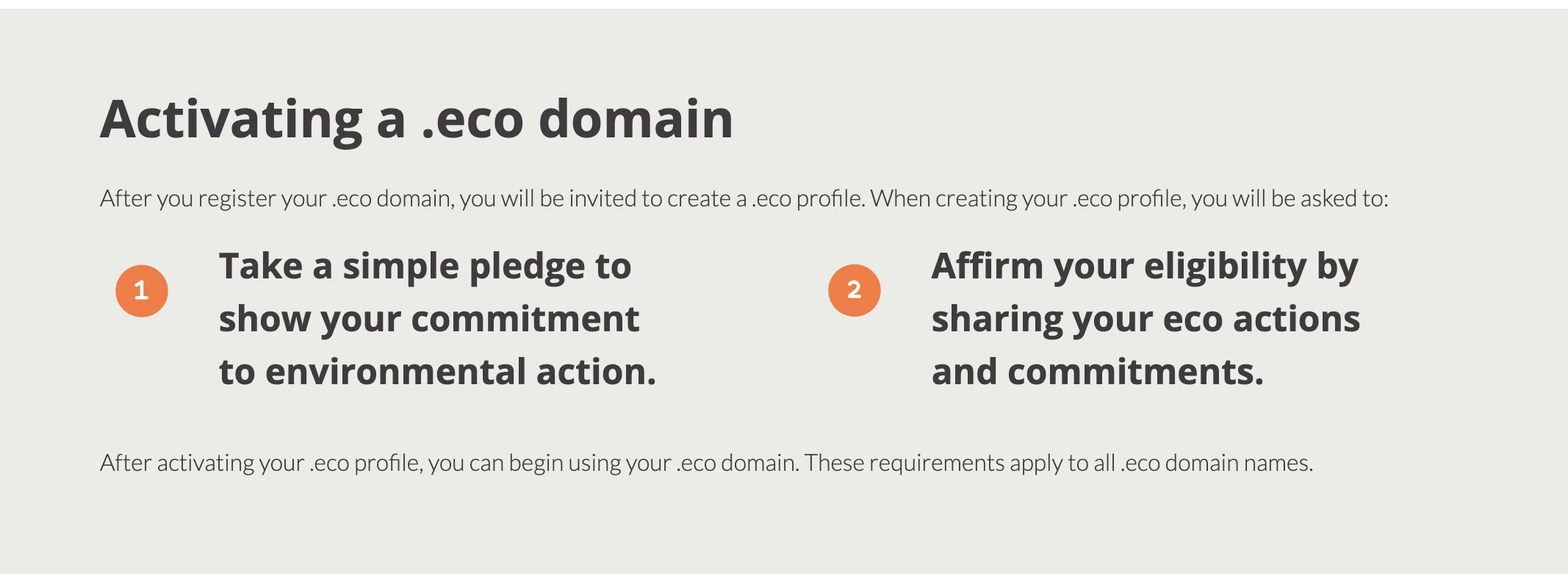
While .com remains the gold standard for global reach it’s not always realistic to secure a .com. Sustainability projects also have unique options. Consider extensions like .earth, .eco, or .green. For specific types of sustainability startups, there are even precise options to match, like .solar and .energy. These specialized TLDs (Top-Level Domains) send a clear signal of your mission’s focus.
However, be aware that some (like .eco) require you to affirm your commitment to environmental action during the registration process. Not all TLDs are to be taken lightly but then sustainability is important stuff, isn’t it?
3. Check availability
Use online search tools to see if the domain name you seek is free. Be prepared to be disappointed. If your first choice is taken, look for variations that include action verbs like “get,” “join,” or “use.” As we’ve just said, check a variety of TLDs – normally there’s something available but question the uniqueness of your choice if you’re having to rummage around like a squirrel to find a suitable domain for your brand.
To help, there are plenty of websites that can help you get a website domain. We’ve used both Godaddy and Bluehost for Akepa and our clients.
4. Don’t forget about trademarks
In the green sector, it is also wise to check if the name is trademarked by existing non-profits or NGOs to avoid future legal hurdles. These conflicts are surprisingly common.
Checking copyright is trickier than checking domain availability. For that, you need to go a bit deeper and use tools for each region, like the UK’s trademark checker. When we tried to register the business as Akepa in the UK, we discovered it was copyrighted, so we registered the business with our sub-brand instead: ‘The Sustainable Agency’.
5. Plan for a “defensive” domain strategy
You’ll want to protect your brand by owning various TLDs. We own akepa.agency and akepa.co.uk, for example – as well as our main domain. By covering all of the bases, we’re preserving the akepa brand as authentically ours in the regions that matter.
Another consideration is that many sustainability projects benefit from buying lookalike domains. For example, if you own GreenPath.eco, you might also want GreenPath.com or Green-Path.org. This prevents brand confusion so your audience always finds you and not a doppelgänger.
6. Register with a sustainable host
Not all hosts are created equal. After securing your domain, look for companies that use sustainable hosting, which is achieved in a variety of ways but best when the data centers are powered by renewable energy, rather than questionable offsetting through tree-planting projects. This shows you’re paying attention to the details when making sure your digital presence is walking the walk, not just talking the talk.
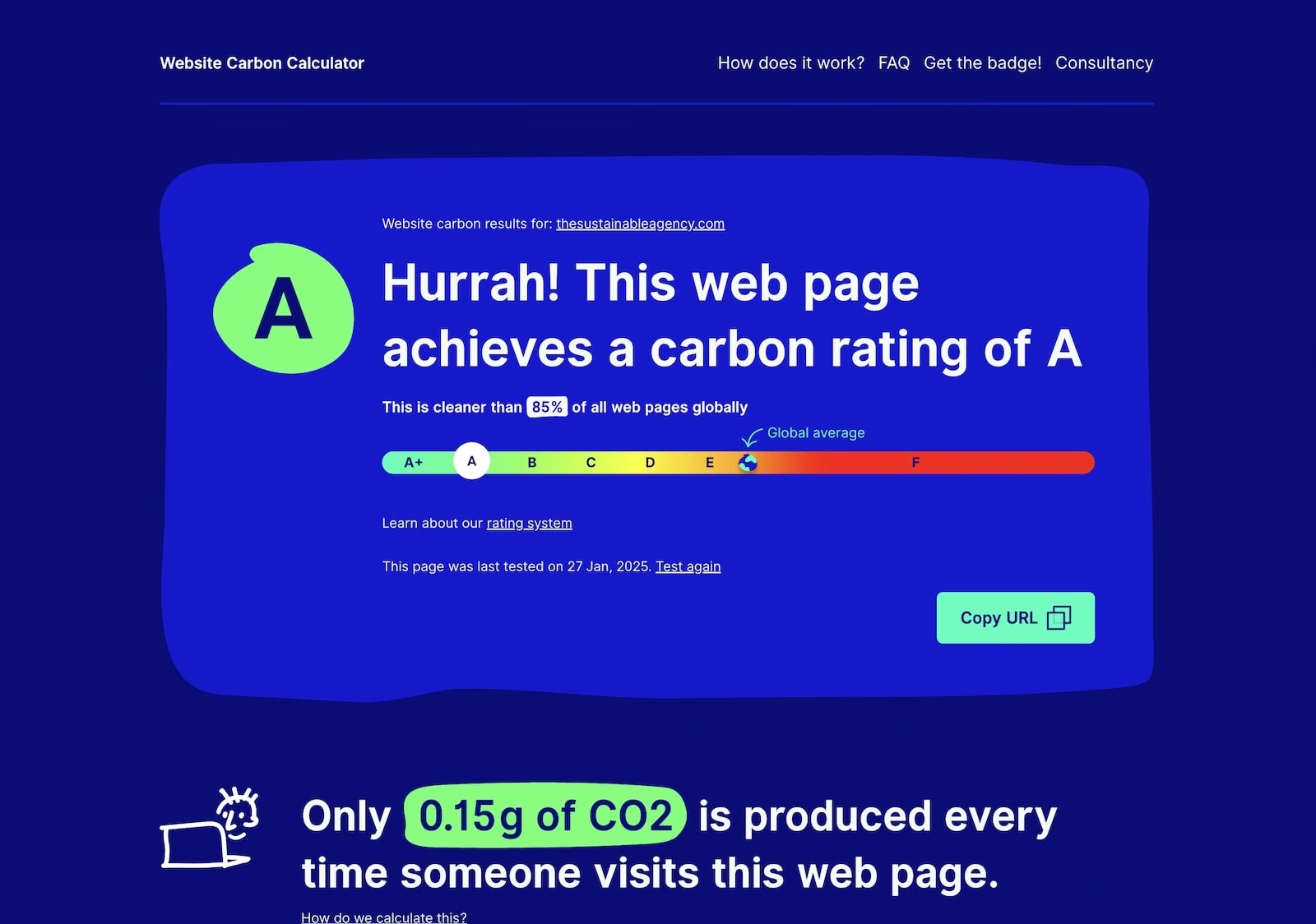
At Akepa, we host our website using a VPS on Hetzner, which is powered by 100% renewable energy. This is why our website is cleaner than 85% of websites when judged by Website Carbon. Yeah, that’s decent but we’re looking to improve this to above 90% in 2026. Watch this space.
7. Set-up “Coming Soon” impact pages
If your project is still in development, don’t leave the domain blank. Set up a placeholder page that outlines your mission. This “Coming Soon” page could include a newsletter sign-up to build a community of early adopters even before your fancy new website launches.
If that sounds a bit technical, remember that most hosts provide decent templates that you can edit – or you could consider a landing page builder. To make the process even easier, some builders now use AI to automatically create the page based on prompts.
8. Automate renewal to protect your asset
Losing a domain because of a missed payment or card malfunction can be ruinous for a growing brand. This almost happened to Akepa a few times due to the reminder emails going to an archived Akepa email. Absolute panic stations ensued.
Most registrars offer auto-renewal. Make sure your contact and billing information is up to date to prevent your identity from being bought by a third party who may not share your values – while creating mayhem for the brand you’ve been building up until that shock.
9. Budget for premium sustainability extensions
Standard domains are affordable but premium extensions like .eco often carry a higher annual fee. Multi-year registrations can often lock in lower rates if you’re making a long-term commitment to your project.
It’s a small but meaningful way to plan for long-term growth. Sustainability is about making sure your business is sustainable, after all. And every little helps.
10. Fortify your digital security
Sustainability, while making perfect sense to some, is also divisive. Sustainability leaders are often targets for greenwashing accusations or digital interference. Fortify your domain with strong passwords and Two-Factor Authentication (2FA) across all key website touchpoints that could be attacked. Make sure you make weekly or daily backups, just in case.
Believe it or not, Akepa’s website is constantly under attack, and one bombardment in particular went so far as to take the website down in late 2025 because the server panel didn’t have a 2FA security layer. Thankfully, we could restore the website due to our daily backups and we’ve now secured the server, hosting and WordPress with 2FA – meaning that should never happen again. We recommend you go through the same anxiety, though. There’s no need to.
Ready? Get your mission going and good luck…
A well-chosen domain is the first step in telling your story to the world – making sure it’s a story of sustainability from scratch. This is a task that deserves speed but also profound consideration – perhaps in the solace of nature. Choose a name that reflects your values, get it early, and we hope our other tips have helped.
It doesn’t end there. There’s a long road ahead once you’ve taken this decisive step. When you’re ready to let the world know about your mission then don’t hesitate to get in touch.



Leave a Reply