


When the topic of sustainability is broached in the world of business, it tends to lean towards the tangible details: supply chains, packaging, logistics, materials, energy sources, recycling. On the other hand, digital work – particularly creative work – is generally considered immaterial. The files are merely files, the changes are made in the cloud, and the environmental cost is abstract enough to ignore.
Welcome to a world where the digital economy is responsible for up to 4% of global carbon emissions and that presumption is very shaky.
At the sharp end of the curve, video communication is now one of the most resource-hungry forms of digital communication – moving across marketing, internal training, education, advocacy and social media, on a daily basis. Even small organisations and freelancers are now producing video, incessantly, with little consideration of whether the tools are appropriate to the job.
This shift might not seem dramatic in terms of its environmental impact but it is cumulative, persistent, and hidden away like arcane knowledge.
The cost of overpowered creative tools
Most professional video editing software is designed for high-end production: cinema-grade results, multi-track timelines, GPU-accelerated rendering, and so on. These tools are mindblowing at what they do – especially with wild new Gen AI capabilities. It is not an issue of capability but fit.
Video work being done today does not demand such titanic computational heft. Quotidian tasks like editing short videos, scaling to fit platforms, compressing, adding captions or piecing together little bits ‘n’ bobs to create a whole, are a sizable portion of real-world edits. Yet, these tasks are often implemented using software that has been created for the epic, not the everyday.
This has consequences for devices too. Bulky desktop software devours more energy, puts a persistent burden on CPUs, and causes equipment wear. The mountain of e-waste (the fastest waste stream in the world) rises from the replacement of devices that prematurely become crappy. In the case of remote teams, nonprofits, or small agencies, the demand to have machines that are capable enough subtly nudges sustainability out of the picture.
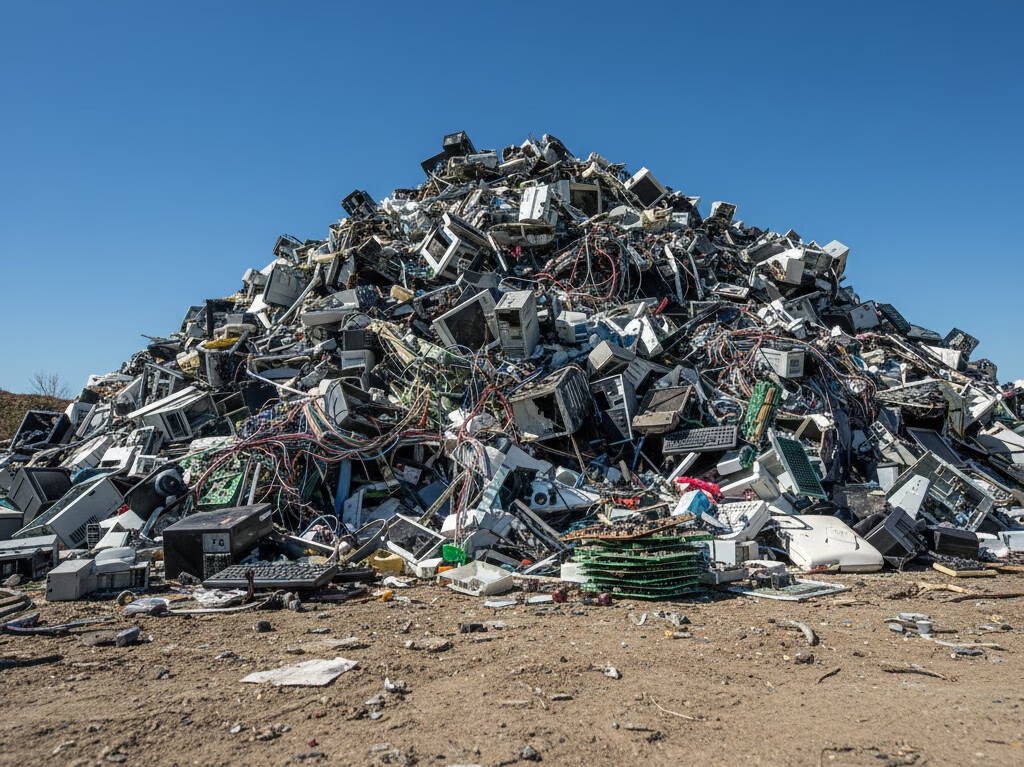
But while this might seem like necessary attrition, it’s becoming a choice.
Sustainability = reducing complexity
Environmental responsibility is not only about the large-scale reduction of emissions and ambitions like net zero. It’s also about reducing unnecessary complexity. Digital efficiency can mean a judicious selection of tools that are adequate, not maximal.
Light workflows minimize energy consumption in a number of ways. They reduce the processing load of the individual devices, increase the lifespan of the hardware and minimize the necessity of the regular updates. They also encourage more inclusive participation: older devices remain viable rather than becoming obsolete bricks – liable to be laughed out of the room and onto landfill.
When an organization proclaims social or environmental responsibility as central to its mission, this isn’t unimportant. Sustainability is a complex concept but at its best and truest, sustainability must be refracted in the operations behind the message. There’s a direct relationship between attention to detail and truth.
Browser-based tools as a way forward
The rise of browser-based tools has been one of the less conspicuous revolutions of digital work in the last 10 years. Just think of the sudden omnipresence of Canva. Such tools can now do what used to be done locally through unwieldy software. The browser has evolved to become a legitimate workstation; a nexus that connects document editing, creativity and design and analytics.
Video editing is at a nascent stage of the curve but beginning to follow the same pattern.
Browser-based editors move processing away from individual machines and towards optimized server-side workloads. They eliminate installations, reduce dependency on high-performance hardware, slow the obsoletion of software, and allow tasks to be completed quickly without lengthy strain. For moderate editing needs, this approach is often more connected to actual requirements and certainly better matched to environmental objectives.
Now, this does not imply that cloud-based tools are intrinsically eco-friendly. Data centers are ravenously devouring energy (and how they are powered determines their sustainability). Still, everything’s relative and in comparison to thousands of personal devices with resource-guzzling software to perform simple chores, centralization can minimize unnecessary consumption of energy.
This is not a revolution as far as sustainability is concerned. It is a cautious step that goes a long way when used regularly, by a lot of people, over time.
A lighter touch to workflows at Akepa
Here’s a window into how that can work. At Akepa, we’re preparing for our ClimatePartner certification for 2026, which involves thoroughly assessing all sides to our business to reduce emissions. We’re looking at the big picture but part of that is spotting those hidden details that are often overlooked, such as AI use and how we can lower the impact of all of the digital tools we employ. The aim is to reduce the number of situations where heavy tools are used by default rather than by necessity.
Like most other agencies, freelancers or creators, we’re beginning to develop more video assets as part of our content mix. So far we’ve been experimenting with Clideo’s video editor, which operates in the browser and focuses on humble video tasks rather than professional-grade production.
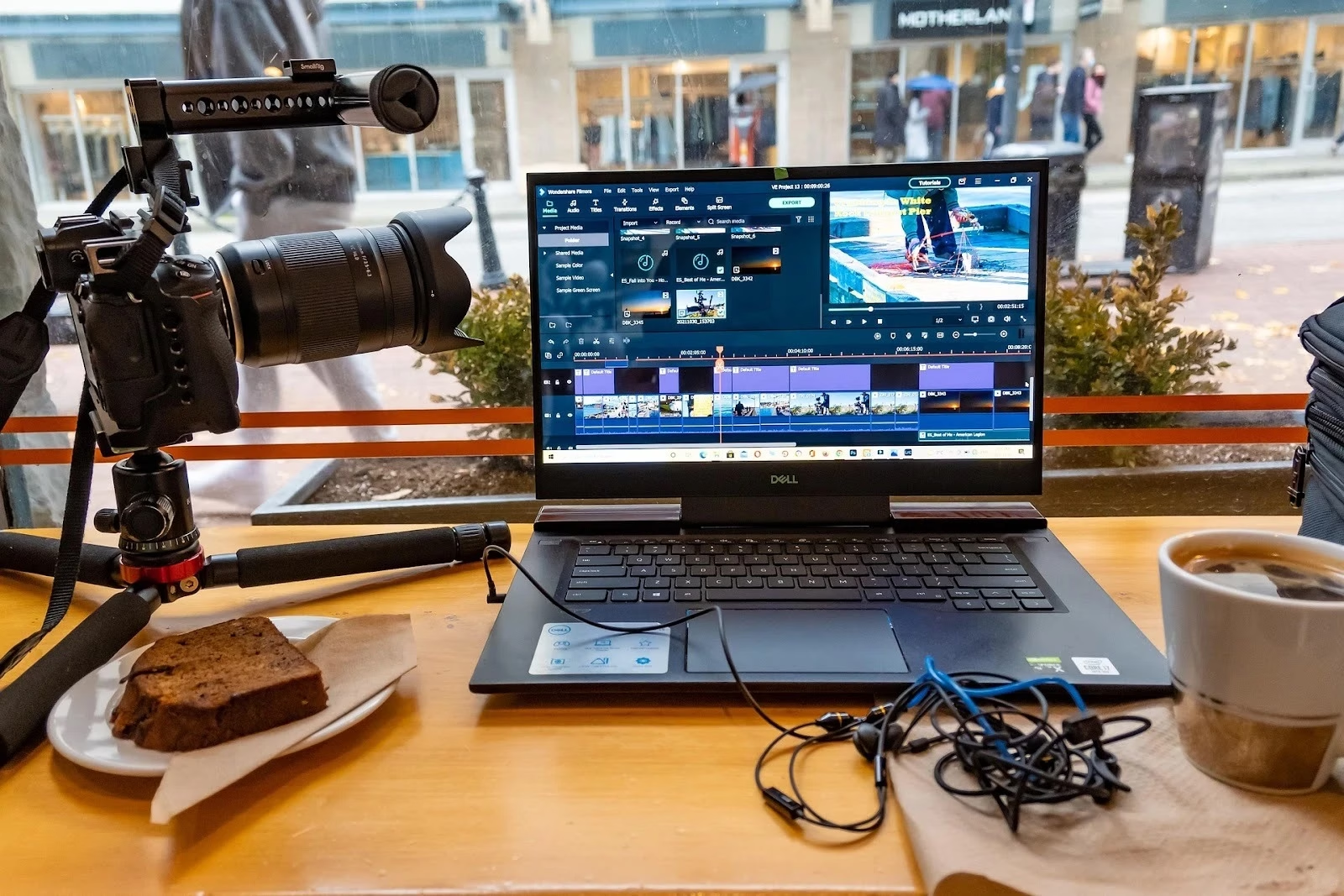
For the videos we create, such as awareness clips for NGOs or lo-fi social media assets, browser-based video tools support a lighter workflow. The work gets done fine and the environmental cost of the process is lower than it would be using overpowered alternatives.
To add to video, for image assets and infographics, we’re considering using Napkin AI to reduce reliance on desktop apps we use, like Adobe Illustrator. All of our text documents are created in the cloud using Google Docs and, to tie everything together, we use eco-friendly browsers and search engines, like Wave and Ecosia.
These might seem like small steps but when you’re trying to keep your emissions as low as possible – you have to dig deep.
This is a work in progress. There’ll be more details on this on reducing the footprint of our creative workflows on our sustainability page in early 2026.
Agencies can be pioneers
Another reason for Akepa to aspire is that the best agencies set an example. Their tools and processes affect the way clients perceive production, timelines and expectations. Once restraint is incorporated into internal work, it can then spread to sharpen-up external processes.
And those agencies that focus on sustainability, like we do at Akepa, should have assessed the sources of campaigns, their production and delivery; the tangible aspects of their own operations. The next logical step is to take a good look at digital infrastructure.
In a world that’s scrutinizing sustainability with hypervigilance, dealing with the hidden impacts is an antidote to greenwashing. Silent choices, such as the video content editing, can be more eloquent than mission statements. Do, however, make sure you account for whatever you’re doing – however inconspicuous those initiatives are.
Little steps, over time, lead a long way
Making our world more sustainable involves bold, disruptive action but not always. Digital sustainability does not come from dramatic gestures. Rather, it emerges from reassessing defaults, questioning inherited habits, and accepting that more powerful is not always more responsible.
Creative work will continue to grow. Video will remain central. The question is whether the systems supporting that work evolve toward efficiency or remain locked in a pattern of excess.
Sometimes, sustainability begins not with what we create but with how lightly we choose to create it.




Leave a Reply