


Remote work hasn’t revolutionized the workplace like many people thought it would but we’re massive fans at Akepa. It’s the way we get sh*t done and a style of working that reduces our emissions too.
Don’t just take our rogueish word for it, reputable studies have shown that remote work is better for the environment. A 2023 study from Cornell and Microsoft revealed that fully-remote workers could have a carbon footprint that’s 54% lower than on-site staff.
It would be a little too smug, though, to smirk at people in offices with their brutish bricks-and-mortar ways and suggest that remote work is perfect; utopian. It is far from that. The benefits are not universal and there are ways to vitiate them. On the other hand, you can also maximize the environmental advantages and in this article, we’ll look at some of the ways you can get the most out of remote work – to minimize your impact. Climatemaxxing, you could say.
We’ll mention some of the handy tools and ways we use at Akepa, along the way.
Slow your travel
Commuting is one of the key ways that remote work leads to lower GHG emissions. An excess of travel – especially flights – is a way to forfeit those benefits and increase your footprint to mammoth proportions.
If you replace your daily car commute with a monthly transatlantic flight, you wipe out all your remote-work carbon savings in one fell swoop. Aviation is awfully carbon-intensive. To keep your footprint low as a digital nomad or remote worker, embrace slow travel. Stay in one location for months rather than days, take trains instead of short-haul flights when hopping between cities, and put the FOMO to one side by getting to know a place intimately before moving on.
Phone calls over video calls
Did you know that a single one-hour high-definition video call can emit 1 kg of CO2? By contrast, a standard audio-only call drops that number by 96% down to a minuscule 0.04 kg of CO2. And while we’ve gotten accustomed to video calls and they allow teams to connect more personally, at scale, what happened to good ol’ phone calls for simple one-to-one conversations?
At Akepa, unless a call will really benefit from video then we have simple calls by WhatsApp. It’s often a less distracting way to have a conversation anyway, as you don’t have to worry about what on earth your big face is doing.
Use a lower-footprint VPN
VPNs are critical for remote work between different time zones. We’ve had to use them a lot at Akepa and on a recent client project in Germany, we couldn’t even login to the client’s WordPress without a VPN.
You have options, here. At Akepa, we’ve used Surfshark because of its unlimited devices policy. One subscription covers the whole team, reducing digital redundancy and waste. Plus, it runs on efficient RAM-only servers and features a CleanWeb tool that blocks heavy, data-hogging ads and trackers before they even load. Less junk data downloaded equals less energy drained from the grid. You can get a free trial of Surfshark’s VPN, for seven days.
Extend the life of your hardware
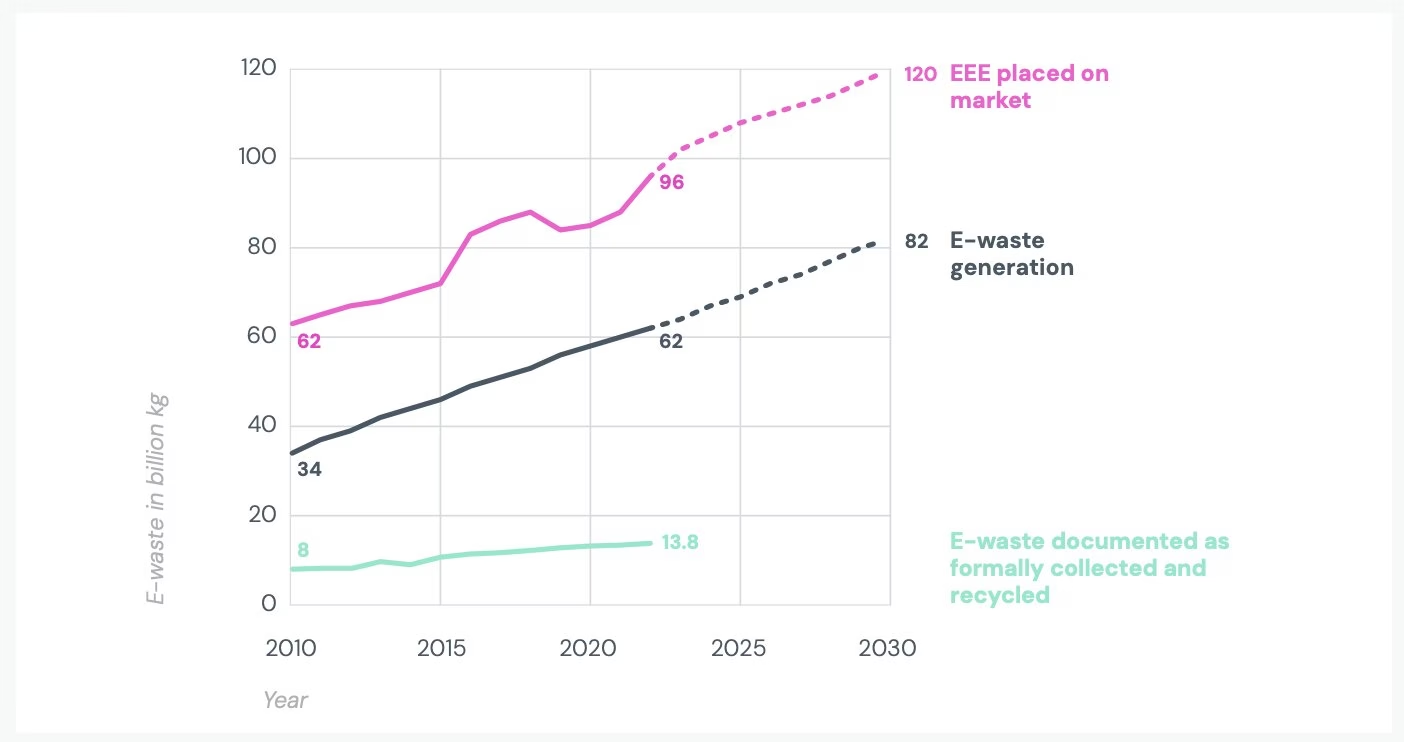
It’s tempting to upgrade to the newest, fanciest laptop every couple of years but the environmental cost is exorbitant. Between 75% and 85% of a laptop’s total lifetime carbon footprint is generated during its manufacturing process – before you even turn it on and switch the background to reflect where you are or want to be.
Mining the rare earth materials and building the hardware is absurdly carbon-intensive. To climatemaxx, fight the urge to upgrade. Repair your current machine, swap out the battery if it’s dying, and when you finally must upgrade, try certified refurbished gear. This post is being typed out on a refurbished iMac, bought from Apple directly and it’s still doing mighty fine after three years.
Collaborate in the cloud
This is a no-brainer. Working with software on your machine and emailing files around is a productivity decimator – it’s also wasting energy and releasing CO2.
Instead of saving a heavy file to your desktop, attaching it to an email, and sending it to five different people (who then save their own local copies, creating a hydra of duplicated data), use shared cloud platforms. At Akepa, we rarely use software on our machines and prefer tools like Google Workspace or Figma to allow multiple folk to work on a single centrally-hosted file. It keeps your team synced, stops your hard drive from overflowing, and prevents unnecessary, energy-draining data transfers.
Practice digital decluttering
The cloud sounds fluffy, airy and ethereal. But it’s actually massive, bulky, energy-hungry data servers humming away in a warehouse somewhere – in serried rows, storing gigabytes of duplicate photos, seven-year-old drafts, and thousands of unread promotional emails. This requires continuous energy and water cooling to keep all that data accessible.
Practice good digital hygiene: empty your trash routinely, delete large files you no longer need, and ruthlessly unsubscribe from junk mail. Less data stored means less energy burned.
Green hosting – if you run a website
Remote work is synonymous with digital nomadism – and most digital nomads need a website to get clients, otherwise they would be stuck in the office working for someone else. Our key tip is to use a web host that’s powered by 100% renewable energy (not tree planting or offsetting).
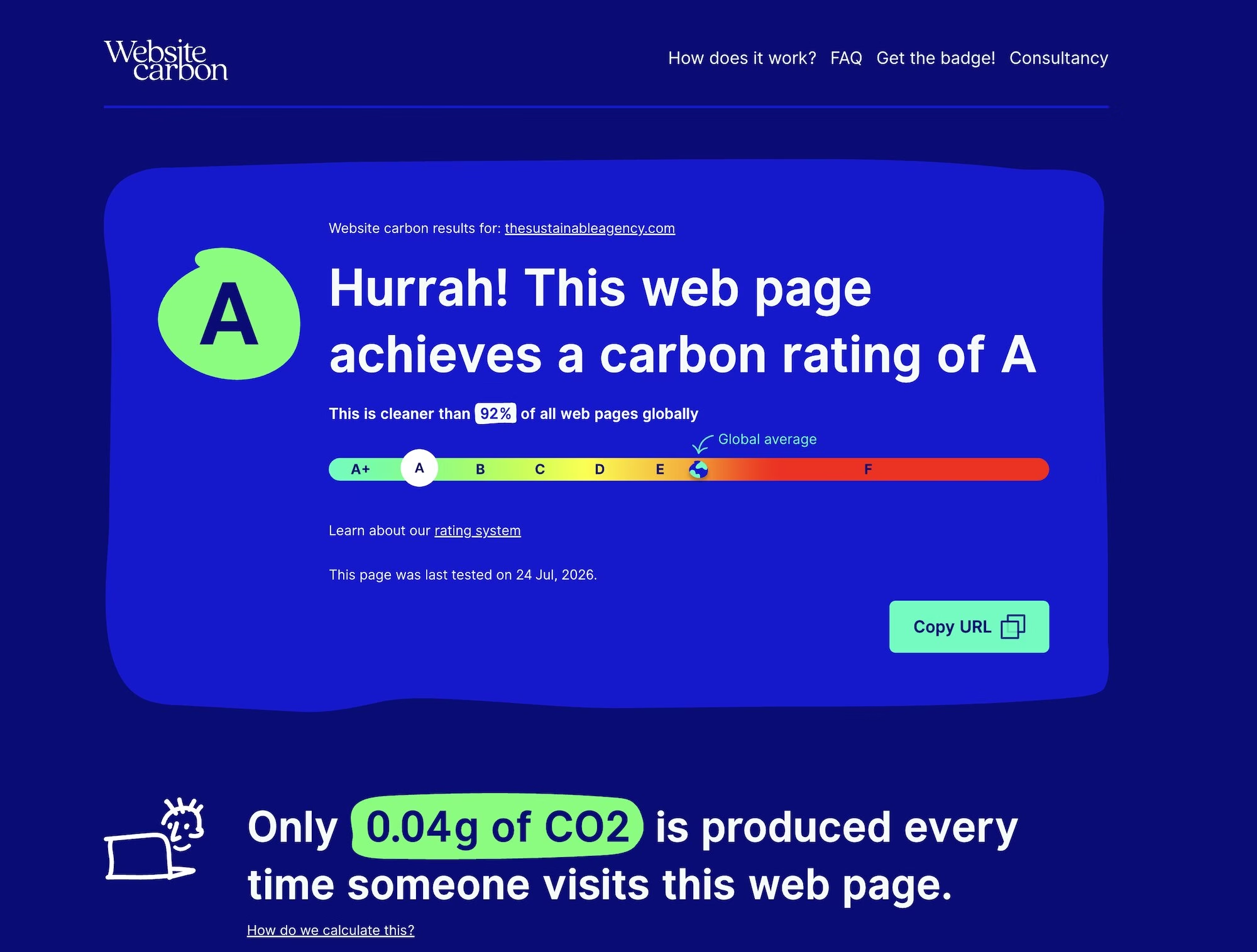
At Akepa, we run our website this way on a virtual private server (VPS) with Hetzner, which is why our website is now 92% cleaner than other sites and only releases 0.04g of CO2 per view.
Optimize workspace energy
When we ditch the centralized office, we lose the efficiency of shared heating and air conditioning. Blasting the central heating in your entire house just so you can sit comfortably in the spare bedroom is a profligate waste of energy. Optimize your setup: use smart thermostats to only heat or cool the room you are actively working in.
If not working at home then head to a local library, or join a co-working space that’s powered by renewables and has other eco-friendly policies to share the load with others.
Don’t blunt your eco-edge!
Are you sitting in an exotic place right now? Or just working from home in your sweatpants instead of the office? Wherever you are – those are some simple tips to get the most from the CO2-reducing benefits of remote work. Not all are simple but there are definitely some quick-wins you can implement.
Once you have a lean process down, also measure your impact and shout about it. The more people that learn about the hidden impacts and how to deal with them, the better. The impacts of personal changes are tiny but leading by example gets more people involved and collective changes can make a difference.
And who knows, maybe a big comeback is in store for remote work over the next few years and more people – and our atmosphere – will enjoy the decent benefits. We’d like that to happen, even though we might not feel quite as special.




Leave a Reply