


For years, the digital marketing playbook has been a predictable blend of SEO, content, ads, data, social media, and retargeting. But for sustainability-focused organizations, this model is over, more or less. People are suffering from ad fatigue, audiences are hidden behind privacy regulations, and perhaps most importantly, the proliferation of false eco-claims has led to skepticism and ennui.
When every fast-fashion giant and Big Oil company claims to be doing something “for the planet”, the value of such boilerplate brand messaging drops to zero, or less. In this clandestine chaos, the most powerful backing a sustainable brand can get is from the very community it serves. Word-of-mouth (WOM) referrals were once quaintly kitsch. Today, they represent the future of sustainable marketing.
Here is why the future of sustainable growth relies on turning your current advocates into vocal fans – with a dash of AI.
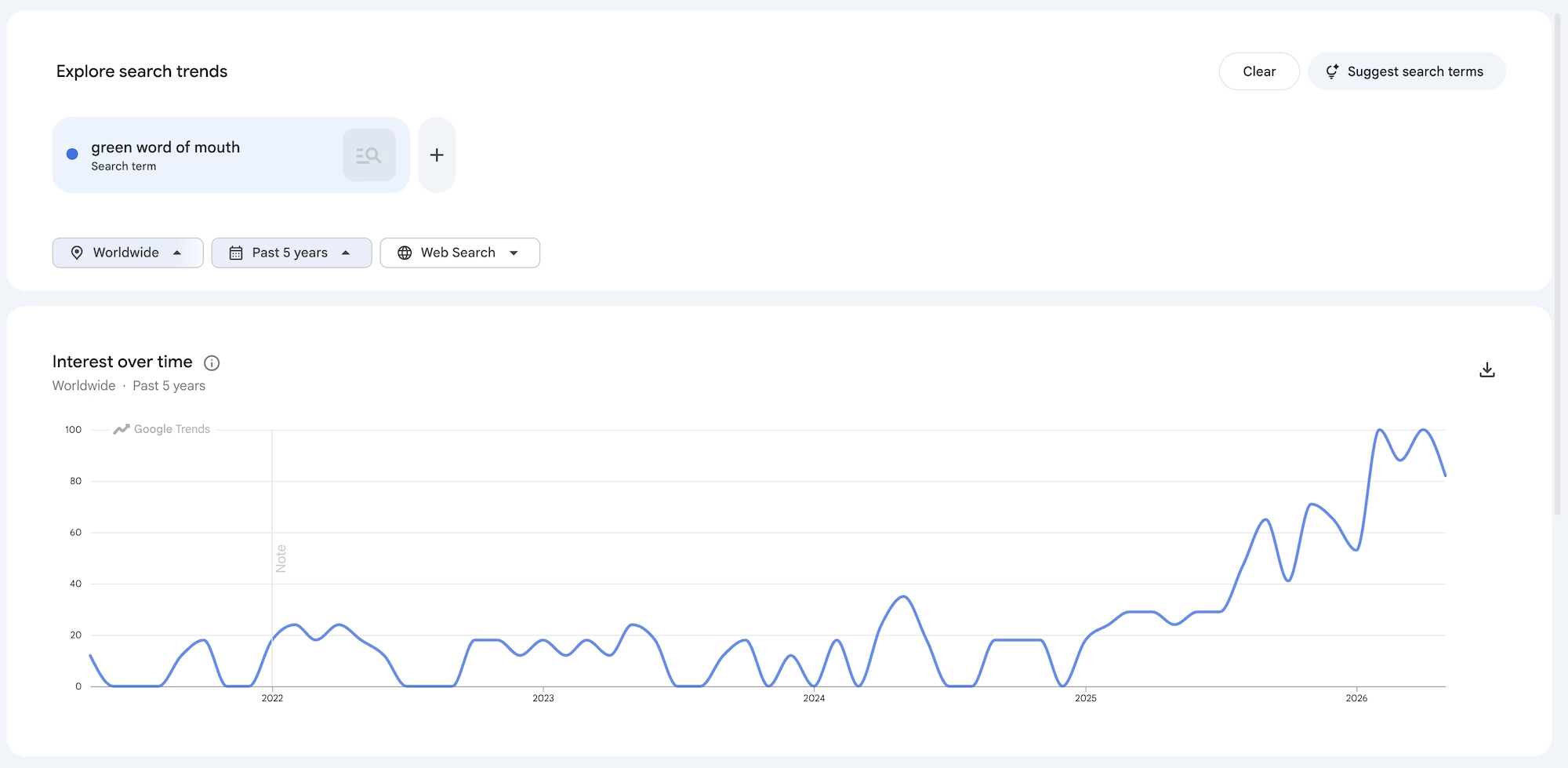
1. The antidote to greenwashing
People do want to make better, more ethical decisions. However, they are paralyzed by a blizzard of misleading labels, vague eco-friendly aesthetics, and unsubstantiated claims about GHG emissions. They have learned, often the hard way, that they cannot take an organization at its word.
This is where word-of-mouth rewrites the script. Traditional advertising asks the audience to trust the corporation; word-of-mouth asks them to trust their friends, family, or respected peers. When an individual recommends a sustainable product or service, a crucial psychological mechanism takes place: trust transfer. The credibility of the advocate is temporarily loaned to the brand.
A referral bypasses skepticism because the vetting has already been done by a trusted source. The recommendation serves as independent verification that a brand walks the walk and isn’t greenwashing. In a market where authenticity is the most valuable yet scarce currency, WOM is about the only channel that guarantees a message is received with credibility rather than raised eyebrows.
2. Search agents and the new era of digital WOM
Information discovery is fundamentally changing. The recent Google I/O 2026 announcements mapped out the biggest search redesign in 25 years, propelling us seekers into the era of “Search Agents.” Instead of typing keywords into a box and then navigating through an unprepossessing list of blue links, people can now employ personal 24/7 AI agents that intelligently run in the background to monitor topics, synthesize updates, and help make decisions.
This remodels the digital landscape.These new Search Agents do not prioritize highly-optimized landing pages or paid placements; they are engineered to scour blogs, independent news sites, and real-world social posts. They’re looking to synthesise a consensus and retrieve it for the human.
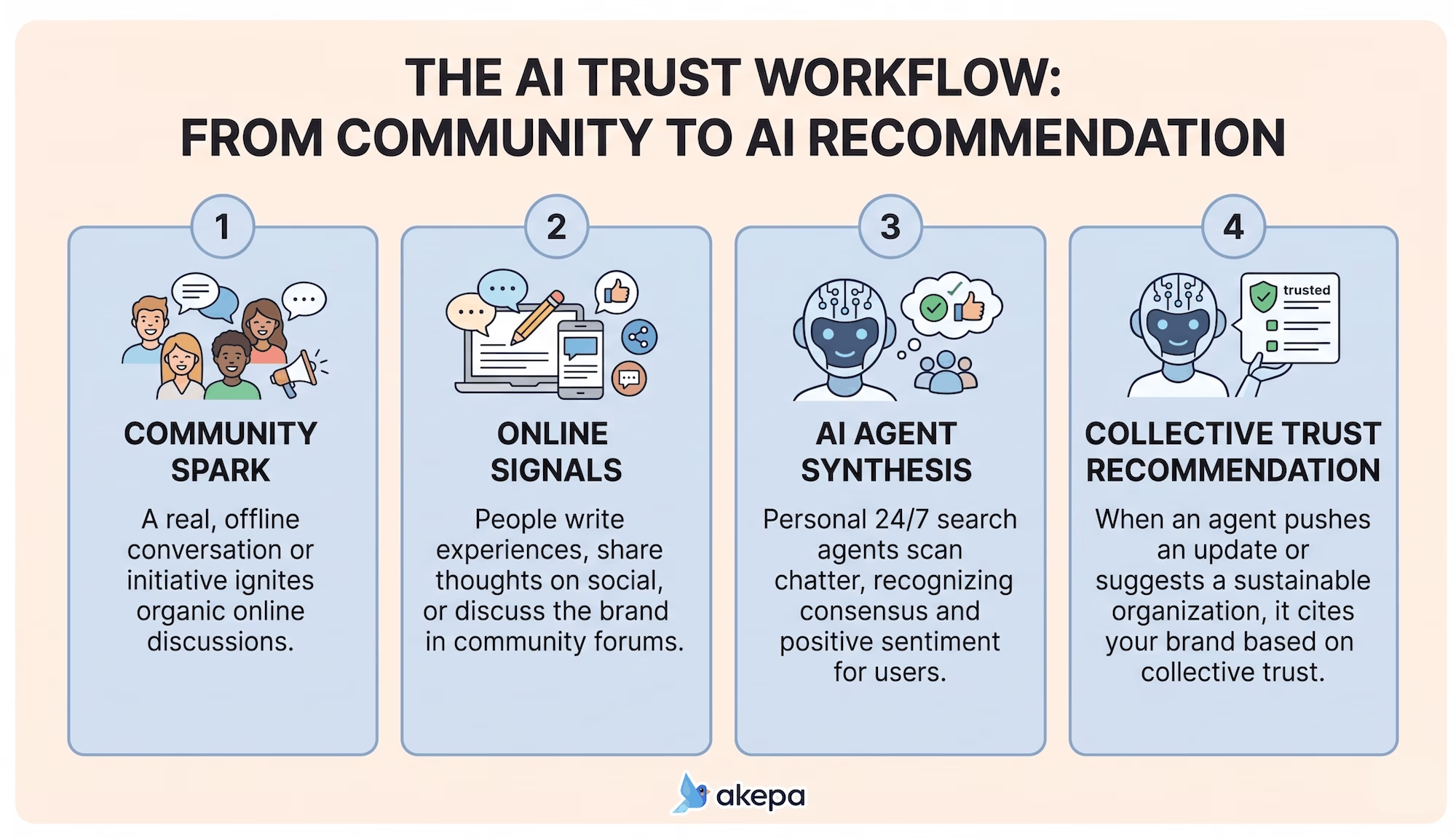
This creates a feedback loop driven entirely by word-of-mouth – something like the following, is how it works:
- Spark: A genuine, offline conversation or community initiative sparks organic online discussions.
- Signal: People write about their experiences, share their thoughts on social platforms, or discuss the brand in community forums.
- Synthesis: Personal 24/7 search agents scan this organic chatter, recognizing consensus and positive sentiment on behalf of their users.
- Recommendation: When an agent pushes an update or suggests a sustainable organization, it is citing your brand based on that collective trust.
In this way, traditional word-of-mouth doesn’t just reach the immediate circle of the person speaking. It feeds directly into the AI ecosystem, leaving a trail for the next generation of 24/7 digital agents to advocate on your behalf. If your reputation isn’t built on real-world community advocacy, you might as well not exist in the AI-curated future.
3. Behavioral shifts, not transactions
Selling a conventional product is often about fulfilling desires. Advocating for sustainability, however, requires inveterate habits to change. Consider asking a person to pay a bit more for better quality garments, or a B2B procurement manager to switch to a more circular local supply chain. Not an easy task.
Humans are social creatures and we look to our peers to determine what is acceptable. Adopting a new, eco-friendly behavior can feel isolating but word-of-mouth normalizes sustainable choices, reducing the inertia when changing direction.
When an advocate refers a sustainable brand to their network, they are signaling a shift in values. They are declaring: “I have made this change and it works for me and my values”. This social proof is the catalyst required to move sustainable habits from niche early adoption to the mainstream.
Modern marketeers love tools and there are platforms to provide a necessary nudge because while customers love to share negative experiences they are more reluctant to share positive stories. For example, a referral marketing tool could help by amplifying positive WOM from authentic customers – or a user-generated content (UGC) platform could curate and display real-life social posts from Instagram to prove that a wider community is already embracing the lifestyle.
And because people carefully curate their public identities, in the sustainability sector there’s more material to work with. While a customer might be reluctant to promote a standard piece of B2B software, they are eager to share a sustainability success story. It reflects impeccably on their personal integrity (and so it should).
4. Decoupling growth from high-carbon acquisition
Unlike activities that have very in-your-face consequences, the digital marketing ecosystem is rarely scrutinized for its environmental impact. Yet, the digital economy is a big source of GHG emissions and those emissions are rising rapidly, against a backdrop of sprawling data centres. Traditional marketing is wasteful, casting a colossally wide net and discarding the 98% of people who do not engage. Think of bottom trawling in the ocean.
For a brand built on principles of resource conservation and waste reduction, spending heavily on inefficient, high-carbon marketing – now fuelled by AI – is a contradiction. Word-of-mouth marketing, on the other hand, is one of the leanest, lowest-impact growth channels available.
Referral marketing takes place within existing social infrastructure rather than new, server-heavy campaigns. It is targeted by default: people naturally only refer initiatives to their likeminded networks. This leads to higher engagement rates and lower waste when reaching audiences. By prioritizing WOM, sustainable brands can better connect their growth strategies to their ethics, at the same time becoming more believable.
The retrofuturism of word-of-mouth marketing
For sustainable brands, moving away from brute-force marketing and investing in the advocacy of their community will be key to growth over the coming years. However, despite WOM definitely not being a new philosophy there’s a retrofuturism to embrace here: brands should understand that today’s WOM must incorporate the dizzying changes happening online. Platforms, 24/7 AI agents, and smart incentives must be engineered into the plan to ensure the word actually gets around.




Leave a Reply