


For sustainable brands, finding success is a tall order. There’s a heaving world of noise, competitor brands are massive, and with limited resources, finding ways to grow and succeed becomes like a David vs. Goliath battle you need to win over and over again just to remain in the game.
When considering how to break through, it’s worth simplifying the epic task into smaller steps. One of the first places to start is to look at your website platform. And one of the key platforms that sustainable brands employ for e-ecommerce is Shopify.
Shopify is by far the most common CMS that Akepa’s clients use. In fact, we’re building a Shopify site for a client in California, right now and it’s looking bl**dy good.
If you’ve chosen Shopify too then congratulations, it’s a top platform. Here are some indispensable tips to get the most from Shopify, based on our experience over the past few years. And we’ll sprinkle in some of our favourite tools, too.
TLDR: Here’s a quick summary of the key points:
- Pick a theme carefully – remembering performance and structured data.
- Add improved SEO / GEO functions with a dedicated app.
- Optimize images for size and keywords – avoiding AI slop at all costs!
- Show off your great feedback to win more customers.
- Shopify can be developed without complex coding but don’t forget experts.
Pick your theme carefully
The foundation of your store is the theme. Everything rises from there. Select a theme that looks appealing but is also built with clean, zippy code. Visitors convert better on swifter sites and search-engine algorithms consider website performance when ranking pages. Specifically, look for a theme that’s optimised to pass Core Web Vitals.
Another important aspect is to make sure your theme integrates structured data – ideally through JSON-LD. Search engines and AI models examine structured data to categorize your products, which improves visibility in search results and possibly citations. Check the documentation to confirm the theme ticks this box, as structured data is only going to get more important over time.
When going through the process of selecting the theme, it’s a wise idea to not get carried away by snazzy looks, or bold words, and test the theme first, which we normally do using a free trial (available on most paid themes). You can also demo most themes worth their salt in your browser, to scrutinize exactly what they offer. Be careful: there are some fantastic looking themes out there that wow you with impressive gimmicks but overlook important marketing functionality. Do your groundwork before committing.
DIY is good but experts can be great
An advantage of using Shopify compared to other CMSs – or, heaven forbid, a headless CMS where you need a developer for everything – is how intuitive it is to edit. You don’t have to be an arcane genius to develop your store. Especially if you’ve followed our first tip and chosen a great theme. But the ease can lead you into a false sense of security; you’re still going to need some extra expert help from time to time. Often, it takes a botched website to realise this.
The Shopify Partner Directory features an array of expert offerings. Some provide specific help like coding and graphic design but if you’re looking to develop your brand then a growth marketing agency that’s focused on Shopify, and also able to develop Shopify sites, is an intriguing proposition. At Akepa we’ve partnered with London’s Clickslice, who offer growth marketing for Shopify stores.
You can find out more about all sorts of providers over at the Shopify Partner Directory.
Use an excellent SEO / GEO plugin
You cover the basics with the default SEO settings in Shopify. To improve search presence, install a dedicated SEO app. Select tools that allow you to edit meta tags in bulk, manage redirects, and optimize for Generative Engine Optimization (GEO).
Search patterns are shifting toward AI-generated summaries. While many of the same tactics influence both classic SEO results and AI citations, there are distinctions. It’s best to think ahead with an app that supports both GEO and SEO to ensure your sustainable products get the word-of-mouth they deserve (even if those words are ‘spoken’ by Agents).
At Akepa, we use Yoast on our client’s sites, which includes great human support.
Optimize your images – and don’t make them sloppy!
Site speeds decrease when you upload large image files, collectively making a site hefty and sluggish – like a lumbering, impaired ruminant in an evolutionary landscape of agile felids. Compress all photographs before you upload them to Shopify and save files in modern formats like WebP and AVIF to maintain visual fidelity at small file sizes. You can use compression tools to shrink file sizes without losing quality.
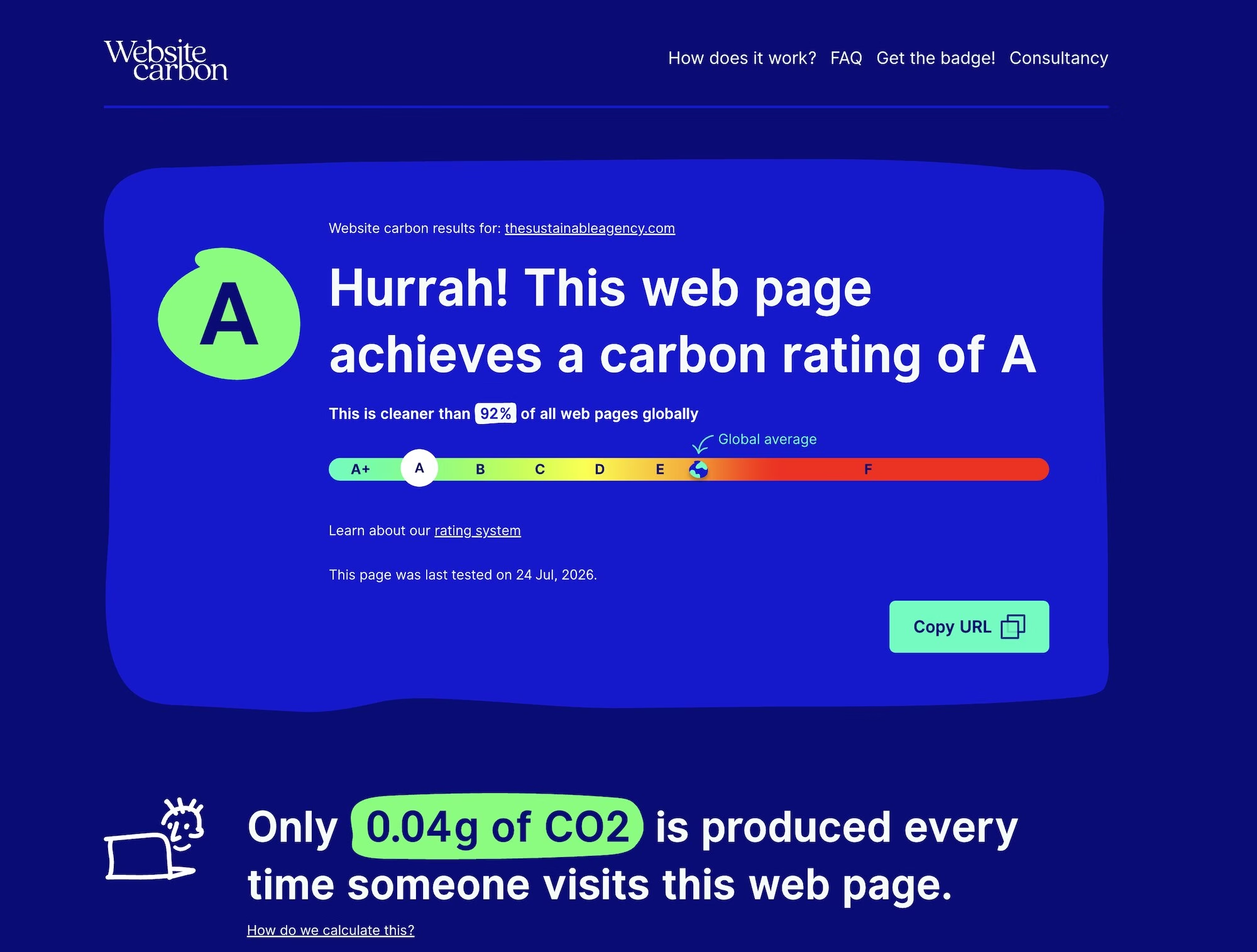
Bear in mind, for sustainable brands, this is also a great way to reduce the amount of CO2 released on each website load.
On the keyword side, add descriptive alt text and file names to every picture. Visually impaired users rely on alt text, and search algorithms index image content using it. This is an underrated way to appear in image results or citations.
Another point on images is that sustainable brands require next-level transparency. Relying on AI-generated visuals creates a generic, sloppy look that people don’t like and causes potential customers to become suspicious rather than reassured. Photograph your actual products in real settings and – if applicable – on real people that don’t look like silky-skinned androids with soft-little-smiles. Show the texture, the materials, the true colors, and the imperfect features. Invest time in setting up a camera and taking original photos, which might seem like a lot of rigmarole in the age of AI immediacy but you prove the reality of your sustainable claims through authentic pictures. Your conversion rates will reward the effort in the end. Shoppers want to see the true item they will receive.

Trust is all-important; show off your social proof
Shoppers look for validation from delighted (or furious) buyers – pretty much any intelligent human or AI agent looks for impartial online feedback these days, regardless of what the website boasts. This is even more the case with a discerning audience interested in sustainability.
To convince more people, integrate customer reviews on your product pages – including star ratings and detailed testimonials. Encourage buyers to leave reviews by sending follow-up emails after a purchase – helped by tools like Klaviyo Flows. Feature user-generated content from social media platforms or review platforms like Trustpilot or Google My Business.
Integrating reviews and UGC from third parties can be tricky, natively, though. There are a range of apps that can help integrate reviews. We’ve used Elfsight for reviews and it works a treat. It’s a paid tool but relatively affordable for the ROI you could get and it automatically adds the structured data we mentioned earlier.
The picture’s bigger than your Shopify site – but everything’s connected
As we said at the start of this post, distinguishing your sustainable brand is difficult and lots of brands don’t make the grade. What are the factors that separate those that cut the mustard from those that fall short? Well, that’s a complex picture that incorporates how good the product is, and even mysterious elements like luck, but let’s be clear: you’re going to need a great website, whoever you are.
So make sure you tick that box off, when examining the multifaceted roots and branches of your brand. And remember that everything is connected. You can’t detach your social media, your content marketing, your customers’ experiences and so on – from your website – and vice versa. Think of your Shopify website as the central hub that ties the whole panorama together and make sure it’s in tip-top shape.




Leave a Reply