


At Akepa, we spend a lot of our time seeking high-quality traffic for brands providing better alternatives to what’s out there.
Google is a vital channel, and one of the first we consider. But we take a data driven approach that opens our eyes to new avenues and recently we’ve noticed that more traffic is coming to client websites from Ecosia, an eco-friendly search engine. Not only that, the conversion rate from Ecosia is higher than from other search engines. In short: visits are rising and they’re outstanding.
Which isn’t a surprise. Ecosia plants trees whenever you search, so it follows that its users will be more interested in sustainability matters. They should be more inclined to convert on a sustainability-focused website after they’ve clicked. For any brand looking to connect, a place that’s popular with a niche audience is better than a confusing crowd.
We’re four paragraphs deep and that’s quite enough because it’s time to get to the heart of achieving more visibility in Ecosia, across five key areas. If you’re reading this – maybe even from searching on Ecosia? – then that’s the nitty gritty you’re after, surely.
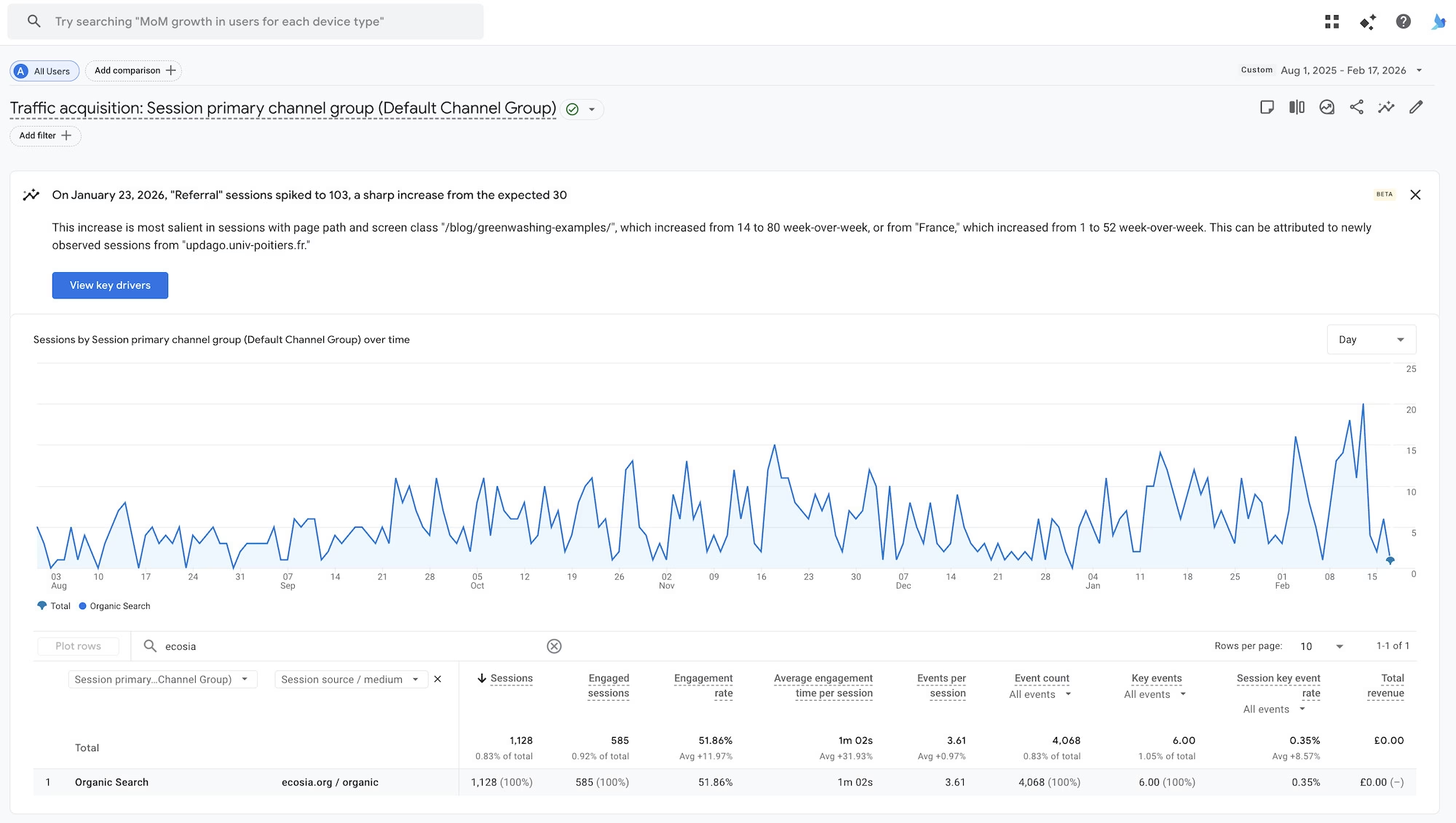
First things first, some quick stats about Ecosia, for those who have not yet sought information using its fine technology – but feel free to skip over to get to the tips.
- Ecosia is a non-profit, independently owned company based in Berlin.
- Ecosia’s market share is about 0.5%.
- Despite being relatively low, Ecosia’s search share almost doubled in 2025.
- Microsoft’s Bing technology is used for Ecosia’s results.
- However, Ecosia refined its underlying technology in 2025 to integrate Staan – a new European AI search index developed in partnership between Ecosia and Quant.
- Basically, Ecosia plants trees or funds sustainability projects when you use it.
- This has resulted in almost 250 million trees across over 35 countries, so far – and over 100 million Euros donated to projects.
- The current tagline is Search. Find. Change The World. This speaks to Ecosia’s distinctive mission.
And now to the tips:
Not quite as smart with synonyms as Google
Google has been in the search game since 1998, as such its algorithm has developed high-level intuition, often understanding the intent behind a search even if the keywords are slightly off. Ecosia (and its underlying Bing/Staan infrastructure) is a bit more literal because, frankly, it’s not quite as advanced yet. It prefers specific, exact key phrases to fetch what you need.
- Be literal: If there’s a really important search that you must appear for (like “sustainability marketing agency” at Akepa) use a close phrase if Ecosia is a priority. While Google might connect related terms like “climate agency” to your website, too, Ecosia responds better when the keywords you’re using match the user’s query closely – if not necessarily verbatim.
- Meta Descriptions matter: Unlike Google, which rewrites your meta descriptions more often than not, Ecosia places a higher weight on them for ranking. Make sure your primary keywords are included naturally in your meta tags and write full meta descriptions so Ecosia can pick them up, even if Google overlooks ‘em.
- Local SEO: Ecosia utilizes both Bing and Google Maps data. If you have a physical location, get your pin registered and consistent across both platforms.
Specifics: IndexNow & Webmaster Tools
Getting indexed on Ecosia can feel like trying to get into an exclusive ethical circle – sometimes your pages are “discovered” but oddly enough they’re not “crawled.” Well, perhaps sustainability should be a little more discerning. But nevertheless to avoid the dreaded “Bing Jail,” you should be proactive with your technical setup.
Use Bing Webmaster Tools (BWT)
Since Ecosia’s results are heavily influenced by Bing’s infrastructure, BWT is your control center. It’s the equivalent of Search Console for Google and allows you to:
- Manually submit pages for indexing.
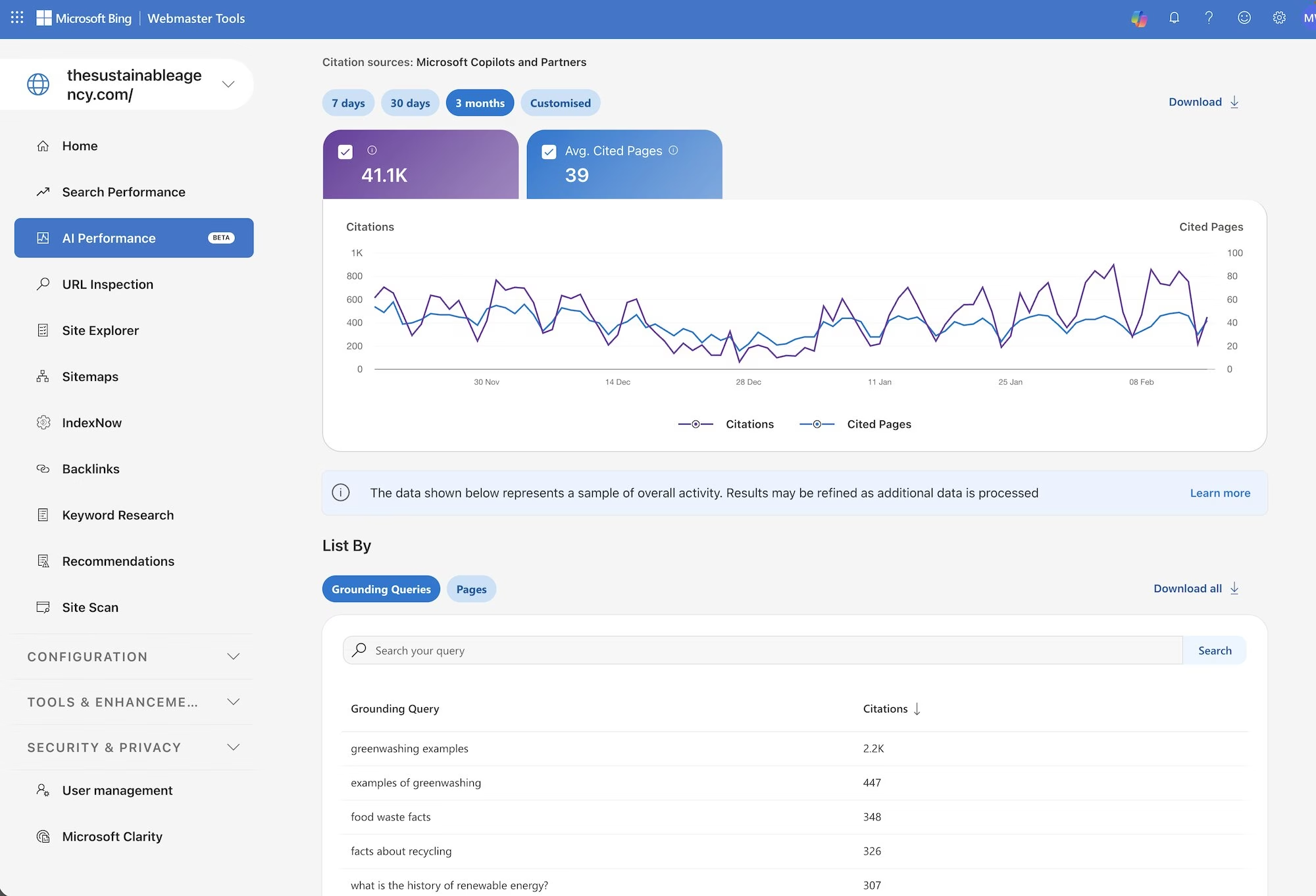
- Monitor which terms are driving traffic.
- Perform site scans to find technical errors (like missing alt-text or broken links) that might be hurting your rank.
- Understand AI performance: this new report – which includes overviews, Copilot, and AI partners – is an argument alone for adding BWT as AI performance is not yet available in Search Console. It bridges a big gap in the data.
Adding BWT is easy as you can import your accounts from Search Console.
Implement IndexNow
IndexNow is a protocol that instantly notifies search engines whenever you publish or update a page. Instead of waiting weeks for a crawl or making fiddly manual requests, IndexNow pushes the data to Bing, Ecosia (and other search engines like DuckDuckGo) immediately.
It’s not difficult to install. We use a free WordPress plugin but you have a few options and with some CMSs, like Shopify, it’s included as standard. You won’t have to worry about a thing.
Improve performance and lower website CO2
In the world of Ecosia, performance is symbiotic with the ecosystem. A heavy, slow website uses more energy, emits more CO2, and provides a poor user experience. Search engines – and the planet – favour lean, fast-loading pages. And on your side, it makes total sense that Ecosia would reward more eco-friendly websites as part of its algorithm. Its new index is aiming to be the most energy-efficient in the world.
Here are some tips to improve performance and lower website CO2.
- Page speed: Minimize the bloat. Make sure browser caching is added and CSS, HTML and JavaScript are minimized.
- Green hosting: run your website using a host that uses renewable energy – for this we use a VPS on Hetzner.
- Images: use efficient modern formats, like AVIF, WebP, and SVG.
- Server: tweak your server so it’s using the latest software and protocols, for example – we use the latest version of Nginx, the latest version of PHP, Gzip compression is enabled, and we’re just about to support HTTP/3.
Here’s another blog post from us that goes into more detail about ways to reduce your website’s carbon footprint.
Become a thought-leading sustainability expert
An important point about modern SEO is that ranking highly – in Ecosia, Google, or wherever – is about building your brand. There’s no silver technical bullet that can get you to the top quickly. The same can be said of AI optimisation: AIO, GEO, or whatever acronym you prefer.
Building a brand these days requires thought-leading content. Because Ecosia users are searching for ethical alternatives, the quality and authority of your content carry even more weight.
Great content builds your brand and also improves conversions after the skin-deep ranking. The eco-conscious audience is skeptical.
- Focus: Avoiding writing about topics unrelated to your brand, just because people might search for them. Develop expertise with focused content. At Akepa, we very rarely write about digital marketing and prefer to write about sustainability. We’ve now built authority around that topic, which is why our rankings are high – even with newer content.
- Social signals: Ecosia’s algorithm looks at social media engagement. If your content is being shared on platforms like LinkedIn or Bluesky, it could signal to Ecosia that your site is a trusted authority in the sustainability space.
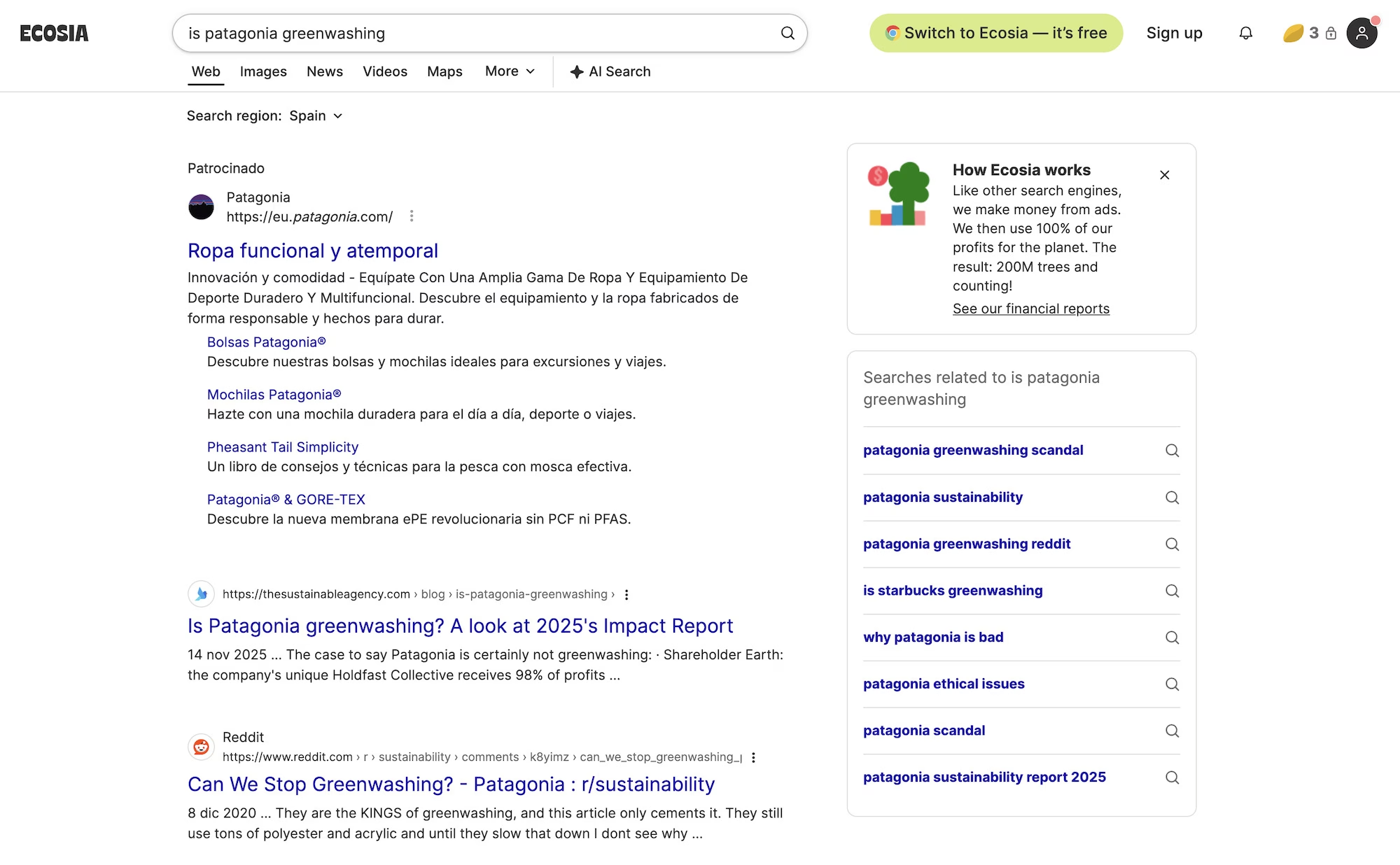
- Thought-leadership: Don’t write basic content like “what is sustainable fashion?” Aim for thought-leading pieces like “does sustainable fashion have a future?”. Smaller search volume, yes – but these are the kinds of searches that AI is less confident giving answers to and you’ll stand out more. The traffic can be surprising from this approach, too. Our recent blog post that discusses ‘Is Patagonia greenwashing?’ is now one of our top visited posts from search engines – including Ecosia.
Consider LLMs – as Ecosia uses AI now, too
The search landscape has shifted significantly because of AI. And in 2025 when Ecosia partnered with Qwant to develop Staan – a European-based search index – it signalled intent. This move was designed to reduce dependence on US/China-based tech and integrate a greener, more transparent AI infrastructure. It’s also a clear sign that Ecosia’s going to get more involved in AI technology, including agents.
- AI-Driven context: Staan uses Large Language Models (LLMs) to provide more direct answers to queries. To show up in these AI-generated summaries, your content may be helped by a clear structure with headers (H2, H3), TLDR summaries and concise definitions. Thankfully, this kind of structure helps human readers with short attention spans, too.
- Keyword research: As with any other search engine, remember that people are now searching in rambling ways that resemble conversations, as they’re mindful of LLMs and AI overviews. Take keyword research with a pinch of salt and consider overall themes of interest.
- The “Green” index: The Staan index aims to be the most energy-efficient indexer in the world. By optimizing your site’s technical efficiency (see Tip 3), you are essentially making your site easier and “tastier” for this specific AI to digest.
- Privacy-first search: Because Staan and Ecosia prioritize privacy, they don’t track users as aggressively as Google. This means your SEO needs to rely more on providing the best answer to a query. Someone won’t be shown your result just because they’ve visited your website before. Be the best result for the topic not the person.
What are you waiting for? Put some of that into practice…
If you’re a brand that’s appealing to climate-conscious folk, then Ecosia is certainly a space where you should be present. Get going with some of those tips because there are quite a few quick wins there, alongside the more complex actions.
Still, whatever search engine you’re appearing for – ranking highly is a deeper task. Modern search engines reward the best brands, not the websites with the most cunning optimization. Technical tweaks are just a start, so you must be prepared to focus tenaciously on the long-game.
If you’ve not quite got the time to meet that challenge, which is understandable, and would like to delegate your SEO to Akepa then we’re experts at it. Just get in touch and we’d be delighted to help.




Leave a Reply