


If you are marketing a purpose-driven brand today, you should be intimately aware that your audience seeks transparency. In the sustainability sector, a vague misleading claim can escalate into accusations of greenwashing, like wildfire. To build trust, you need more than good brand messaging – you need proof that your brand’s actions are good.
This is where social media listening can help – and it’s an aspect to our clients’ marketing that’s getting more important. To listen-in, brands can tap into social media APIs. But what exactly are APIs and how can they be an elixir for ethical brands? Let’s have a peek…
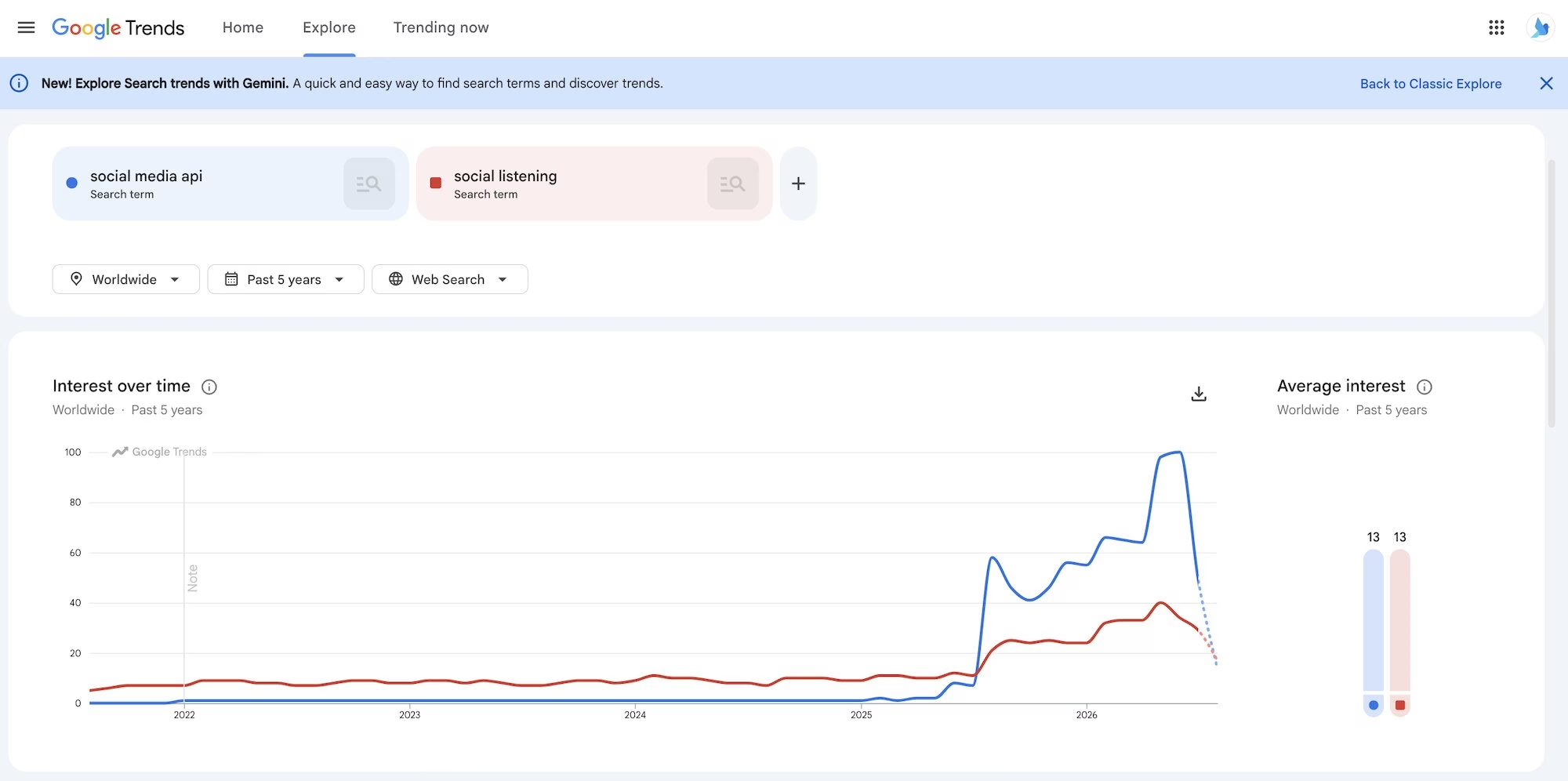
What is a social media API?
First, a quick bit of background. API stands for Application Programming Interface. Think of it as a digital translator that allows two different pieces of software to have an easy conversation.
In the context of social media, an API allows your business (or your marketing agency) to request secure, raw data directly from platforms like Bluesky, Instagram, TikTok, Reddit or – if you haven’t ditched it yet because of the ethical dilemmas – X. Those are the major platforms but almost all social media channels have API access, although with varying limits and sometimes with charges or tiered pricing.
For brands existing in a lot of noise, an API lets you automatically extract precise, structured data – like posts, comments, hashtags, and real-time engagement metrics – and organising that mishmash can lead to insightful, convincing, and enriching stories. This automation is far more efficient than manually scrolling through feeds and guessing how an eco-friendly campaign is going down, or what people are saying about your brand.
Why sustainable brands fit API-driven insights
For traditional brands, social media metrics are often just a vanity exercise; the numbers that tell the story of a wannabe viral meme or something. For sustainable brands, social data is more about reputation management and compliance.
Folk interested in sustainability are more likely to investigate the supply chains, labor practices, and carbon footprints behind the products they buy. They want to be sure that other people have had good experiences and they are making responsible choices. If that sounds picky then remember that’s the whole point.
By tapping into social media APIs, sustainable brands can track these messy yet invaluable conversations at scale, making sure that messaging is hitting home and identifying potential risks before they turn into full-blown PR disasterclasses.
Why use social media APIs? key benefits
- Combatting greenwashing accusations: APIs allow you to monitor public sentiment in real-time. If a new “compostable packaging” initiative is being criticized in the comments as misleading, or if a certification you have is losing its shine, you will know immediately – not a month later in a report call or meeting.
- Convincing social proof via website embeds: For sustainable brands, community trust is key. APIs allow you to automatically pull user-generated content (UGC) – like real customers reviewing your eco-friendly products – directly onto your website. Embedding live social proof at the point of sale shows that your community is confident in environmental claims. Plus, it’s just a great way to lift conversion rates on your site.
- Cross-platform consistency: Sustainability conversations don’t happen in a vacuum but they can diverge – especially with AI agents marauding around. APIs allow you to pull data from Reddit threads, TikTok videos, and LinkedIn posts simultaneously, making sure your brand’s narrative is consistent everywhere and, if it isn’t, take the first steps to fix it.
- Trend forecasting: By setting up API queries for specific environmental keywords (e.g., “circular fashion” or “biodegradable”), you can spot emerging concerns and tailor your product development to meet the demands that are actually out there, not just what you think is the sauce.
- Competitor accountability: APIs don’t just track your own channels. You can analyze public data from competitors to see where their sustainability claims are falling short, allowing your brand to stride in and fill the gap.
- Data-backed reporting: Purpose-driven stakeholders, investors, or your clients, are fond of numbers. APIs transform messy social conversations into quantitative data that proves the ROI of your ethical campaigns. Google’s Data Studio, for example, which we use for our client reports at Akepa, connects well to most social media APIs.
API Examples: technical extraction vs. marketing platforms
Not all social media data solutions are built the same. Depending on your brand’s technical capabilities and goals, you might caress different breeds of API tools.
Typically, API tools are targeted at two distinct audiences: marketers and developers. Here are a couple of examples of useful apps in the area.
The developer approach
For organizations that require raw, unfiltered data to build custom analytics models, data aggregators (or third-party Raw Data APIs) like Data365 are the way to go.
Rather than dealing with the strict limitations and fragmentation of official platform APIs, these tools unify publicly available data under their own single API. This allows developers to extract real-time data – such as post metrics, profile history, and boisterous comment threads – across platforms like TikTok, Reddit, and Meta simultaneously. When the data is delivered in structured formats like JSON, it can be plugged directly into custom dashboards or – moving with the times – AI models. For a sustainable brand, this means you can perform unbiased sentiment analysis without being restricted by what a platform’s algorithm chooses to present.
The marketing approach
For marketing teams that want the power of API data without needing to write code, user-friendly platforms like Sprout Social are ideal.
Sprout Social uses various APIs on the backend to power its Social Listening suite. It processes unwieldy amounts of data (up to 50,000 posts per second) and wraps it in a user-friendly interface. And of course there’s now AI, with which brands can build complex listening queries around topics like “regenerative agriculture” or track their own brand’s vitality across multiple networks. Such platforms simplify the API experience, allowing social media manager types to turn multitudinous raw data points into intuitive insights and campaign reports – across neat dashboards.
The DIY approach
Wait, do you even need a third-party tool? Technically, you don’t. You can plug directly into the official APIs provided by the social networks themselves (like the Meta Graph API or Reddit’s developer portal). To do this, you register as a developer with each platform, get an access token, and have your dev team write custom code – usually in Python or Node.js – to request the data.
However, the disadvantages are hefty. First, you are at the mercy of the platform’s strict rate limits, meaning they will abruptly cut the supply if you ask for too much too fast. Second, the maintenance gets very messy. You have to build separate pipelines for Instagram, TikTok, and Reddit, and these platforms change their API rules constantly, without warning. Basic access used to be free but now many social networks like X and Reddit are paywalling API access or introducing tiered pricing, so there’s not even a major cost advantage.
Unless you have an in-house engineering team with time to burn fixing broken code, this option usually ends up costing in developer hours. Nevertheless, it can work for teams armed with the necessary expertise.
You can’t extricate your customers from your marketing
Perceptions around both social media and sustainability are in flux. But what’s clear is that neither social media nor sustainability are going anywhere soon. People will remain engaged with social networks like Instagram – love them or hate them – and people will continue to care about the kind of planet future generations will inherit; thank goodness for that.
The intersection of the two is perhaps the most important thing that you can embrace as a sustainable brand right now. Your folk, their opinions and their experiences, are more important than your ingenious campaigns or hero lines. Knitting your brand and the social world together requires some basic technical literacy, at least, and today we hope we’ve helped elucidate the world of social media listening via APIs.
Of course, if that still sounds a touch too challenging and you’d like some help developing your brand through social media don’t hesitate to get in touch with Akepa.




Leave a Reply