

Content marketing is essentially about giving your audience something useful – whether that content is inspiring, educational, entertaining, it doesn’t matter. But if it’s useful to your audience, then it’ll help you as a brand build a relationship with them. And if you build a relationship with people, they’ll trust you. And if they trust you, they’ll want to support you. Content marketing can be blog posts, infographics, videos, tutorials, ebooks, podcasts, newsletters, Instagram lives, etc. When done right, content marketing is:
“A strategic marketing approach focused on creating and distributing valuable, relevant, and consistent content to attract and retain a clearly defined audience – and ultimately, to drive profitable customer action.” – The Content Marketing Institute
We’ve discussed why content marketing is beneficial for sustainable brands. In this article, we break down some top tips for sustainability storytelling with content marketing.
- Resist AI slop
- Believe in the message
- Admit imperfection
- Get creative behind the scenes
- Spice things up visually
- Keep it light (if you can)
1. Resist AI slop
Over the past few years, generative AI has turned the marketing world upside down. Some might say the promise is huge but then the environmental and societal side-effects could be massive, too. In sustainability, which is essentially about preserving the planet and its folk, then you must consider the drawbacks, like huge emissions and job losses, if you use generative AI.
But before that dilemma is even considered, you should also be aware that AI ‘slop’ can be quite useless at telling your story anyway. We’re now deeper into the AI curve and there’s less amazement and far more fatigue – in sustainability there can even be fury at brands for using it hypocritically. The audience is wiser to the mysterious ways that AI moves, from meretricious videos to vapid articles. Some marketeers are now actively trying to make things ‘less AI’, if it has been somehow employed by clumsy hands during the content creation process.
It’s a tricky, layered area and it’s evolving. Our tip is to use generative AI sparingly when it will allow you to realise a next-level idea that you wouldn’t be able to execute otherwise. Never use AI out of laziness. Always maintain the human element to tell your personal story – and start from that place. Unedited AI articles, images or updates are an absolute no no – unless you want to pointlessly sound like everyone else.
Example of the dilemma:
One of the cleverest generative AI campaigns was by the WWF Denmark on the hidden costs of consuming certain foods. It received a lot of praise and viral reach because of the striking imagery. But the campaign also received criticism because of the use of AI and it’s uncomfortable fit with the message. Hidden costs are obscured behind AI, also.
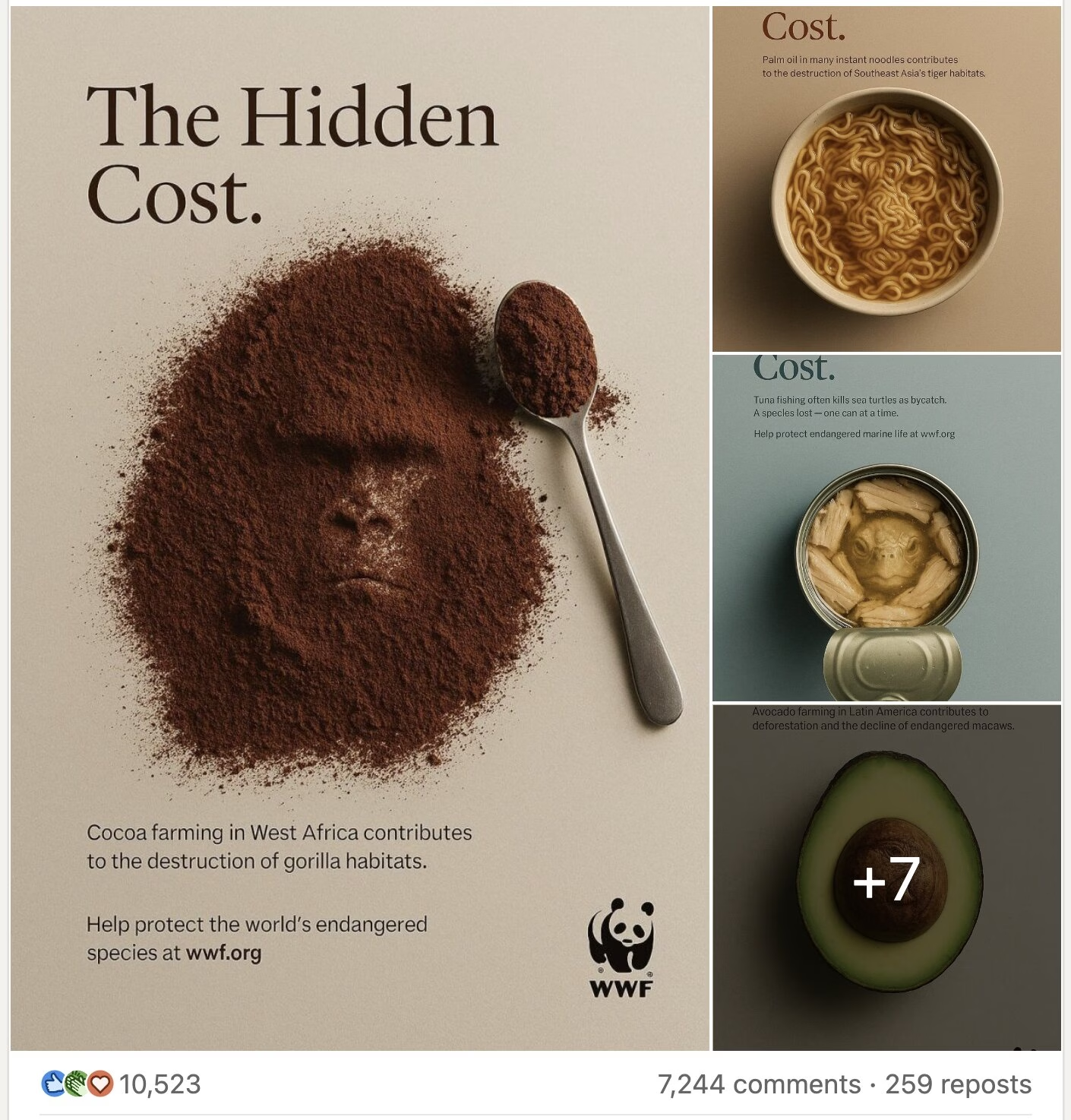
Whether you like the campaign or not, it’s an example of generative AI being used exceptionally but also highlights the risks. And those risks increase exponentially as the ideas get less ingenious than this one.
2. Believe in the message
A lot of content marketing is about enlightening a particular audience on a particular topic. One of the most elementary tips we can give as a sustainable marketing agency is make sure you believe in the message you’re sending. More often than not, brands will try to hop on a trend because they see that it’ll attract people. But this isn’t authentic nor is it convincing in the long run, because people are becoming savvier when it comes to assessing the sincerity of brands. If your message is genuine and if you’re passionate about the topic, people will sense that.
Remember that you want to get this message across for a purpose you care about – that’s what it should feel like, not like marketing.
Example of how this is done WRONG:
One way content marketing can be used in sustainability is to inform people about how they can take individual action to help the planet. But when it comes from the largest oil companies in the world, it’s flat-out treacherous propaganda. Despite being an oil giant, BP often postures about people reducing their carbon footprint. But what many might not know is that the concept of carbon footprint was actually coined by BP, after they hired PR professionals to try and pass the buck to individuals for climate change.
Over the past decade or so, Big Oil has repeatedly been exposed for this greenwashing – did they really think people would keep falling for it? The takeaway here is to be authentic when sending a message.
3. Admit imperfection
One way to enforce a trusting relationship with an audience is by being honest about imperfection. This is one where many brands fall short. Behind a brand there are fallible humans – we shouldn’t forget that. And projecting perfection is shortsighted, because when it comes to sustainability, there is always something that could be done better.
Besides, there are plenty of critical people out there who will point that out unless you address it first. Addressing past mistakes and discussing how the brand can do better will more often than not result in people appreciating that you’re on the right track.
Example of how this is done RIGHT:
Despite being a company founded on sustainability grounds, Patagonia admits that they aren’t doing enough. Beth Thoren, the Environmental Action and Initiatives Director at Patagonia, says that they don’t use the word “sustainable” because they are still part of the problem. Part of this radical approach was Patagonia’s famous anti-Black Friday ad campaign where people were told not to purchase a jacket, unless they truly needed it. They even openly shared the environmental footprint of what it takes to create that Patagonia jacket. Takes a bit of conviction to do that.
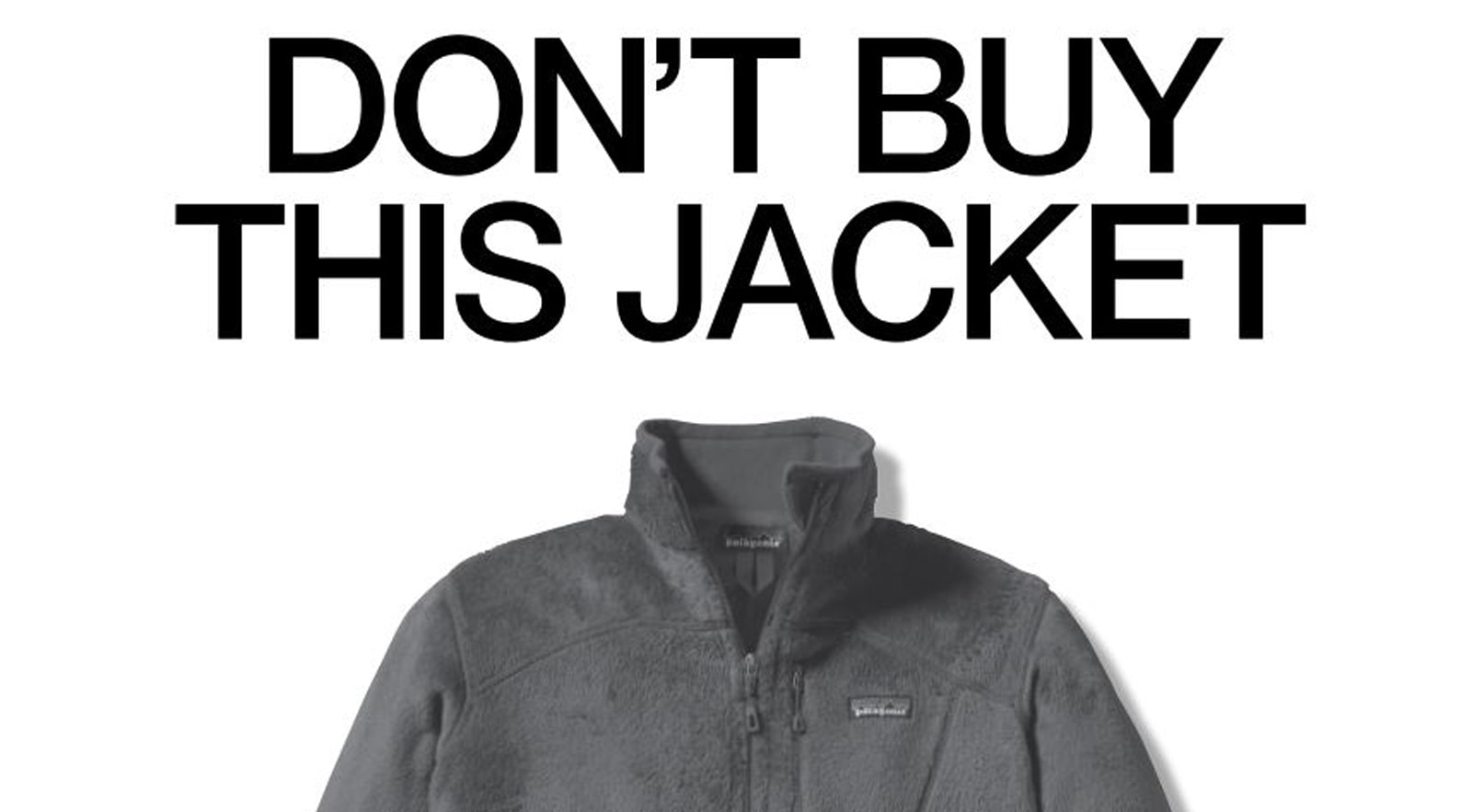
That was back in 2011, a more recent example from the same brand is Patagonia’s 2025 Impact Report, which is full of transparency about failings and once again declares ‘nothing that we do is sustainable’. There are some paradoxes with Patagonia’s marketing, which are discussed in this Akepa blog post, but one thing is for sure, they know how to be radically honest and it captivates the audience.
4. Get creative behind the scenes
Look, if your brand is doing good work, you should show that off. Share the process, the behind-the-scenes, be transparent. But it’s equally as important to do it in a creative way. A story can be told by creating a vlog series, or an interactive page on a brand’s website, or through collaborative social media takeovers. The options are endless. If a brand goes out of their way to create content about the unseen production work that’s going on, especially in a way that gets the audience’s attention, the likelihood of people being loyal to a brand can increase.
Example of how this is done RIGHT:
KNOWN SUPPLY takes supply chain transparency to a deeply personal level by connecting customers directly to the people who craft their clothes. Every single garment they sell has a tag sewn inside featuring the actual hand-signed signature of the garment worker who made it. By visiting their Meet the Makers directory, customers can look up that specific signature to find a personal profile of the worker, complete with their photo, hobbies, and goals for the future. They take this storytelling a step further by making it interactive: customers can leave a digital “Thank You” note directly on the maker’s profile, which the brand translates and delivers. To amplify this strategy, they frequently share these maker stories and user-generated “thank yous” across their social media channels and Instagram Highlights, making the human element of their supply chain incredibly visible and engaging.
Lucy & Yak is another brand that includes details about the garment workers involved in their supply chain across Instagram Story Highlights dedicated to their ethics, which includes plenty of user-generated content.
5. Spice things up visually
A strong message is nothing if people aren’t inspired when seeing it. The way a message is communicated is key, as these days with so much sustainability fatigue, it’s easy to feel impassive and get picky with the content you’re bombarded with.
That’s why making your sustainability storytelling visual is important; it’ll be more entertaining for people to read. Imagine looking at a long, mundane piece of text vs. a video or a series of graphics that are both communicating the same message. Which do you think would be likely to hold your interest longer?
Examples of how this is done RIGHT:
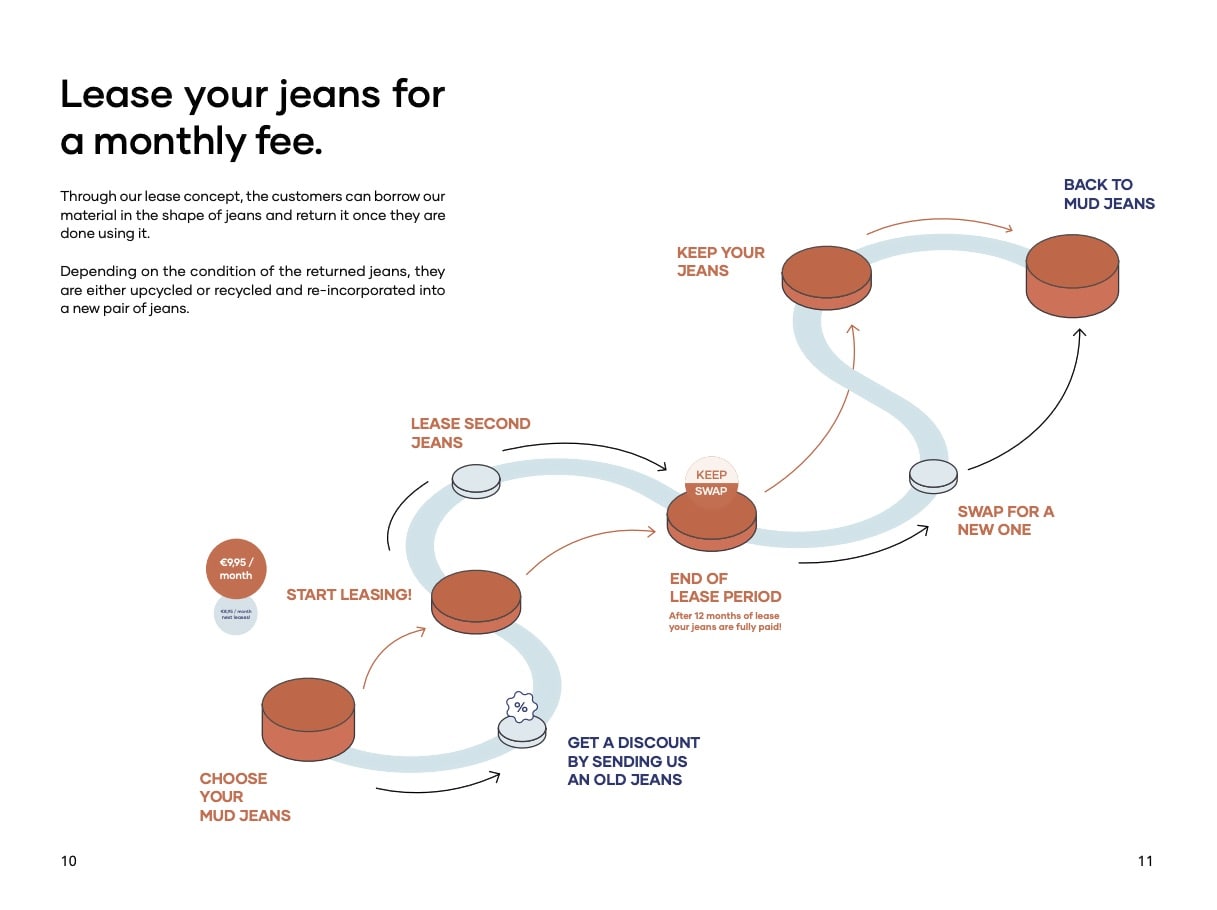
Mud Jeans has made several sustainability reports where they manage to make book-like tomes of information (which could be like wading through mud) entertaining and visually appealing. They’ve got all sorts of nice designs, infographics, and well-thought-out typography to get their message across. One of our clients SANVT decided an infographic about the environmental impact of fast fashion would be better than an essay-like blog post. And a last example of a job well done to make sustainability content marketing beyond entertaining is Oatly’s instagram.
6. Keep it light (if you can)
Lastly, sustainability is of course serious. After all, it’s a concept that could underpin the success or the perishing of people over the coming years. But that said, it doesn’t mean that it has to be sanctimonious and it doesn’t have to be boring either.
Ultimately, this is about getting your message across in a more receptive way to a bigger audience. Telling your sustainability story in a staid, formulaic way will just get people switching off. It might even get them defensive. In a way, sustainable content marketing is just like any other form of storytelling – and nobody likes a tedious story or a narrative they’ve heard a hundred-million times before.
The issues are colossal but it can often be more impactful to keep it light, entertaining, fun, and even a little quirky and original. Sometimes the topic just isn’t suitable for that kind of levity but if you can, then you should.
And what about you? Are you interested in telling your sustainability story in a way that’s going to make more of an impact? If so, get in touch and we’ll see what we can do!




Leave a Reply