


Your company can spend years trying to be seen as sustainable by people and society, investing heavily in ethical production and reducing emissions, yet remaining invisible in AI-generated answers. There’s no respect to history. And you are not alone here, as this situation is far more common than you may think.
At Akepa, this is an obstacle that we’re being increasingly asked to help brands overcome. One of the biggest challenges for sustainable companies in 2026 is not doing good things but being consistently selected by AI answer engines. With so many people consulting AI about everything and anything, marketing your products properly and cultivating strong PR to show-off your values are no longer enough to cut through the white noise.
So how you do appeal to AI systems so they recognize, trust, and routinely cite your brand and the content you create?
Want to know how? Let’s explore how to build authority in AI search and what sustainable brands can do to get featured in AI answers.
Why AI search changes the rules for sustainable brands
Since its appearance as a policy concept in the 1980s, sustainability has been relatively easy to showcase. One just needed to be honestly environmentally friendly, demonstrate genuine care for people and societies, promote this philosophy to society through ads and PR, and in 99% of cases, one’s public image would match one’s aspirations.
In the 2000s and especially early 2020s, this approach has been appended to include digital PR, active social media coverage, and relevant SEO practices to get visibility in traditional search engines like Google and Yahoo.
The rise of ChatGPT in 2022 and the emerging AI answer engine revolution literally broke this formula.
When someone asks an AI assistant, “Which companies have credible sustainability practices?” they often receive a direct answer instead of a list of links. The brand that gets mentioned becomes part of the recommendation itself. The brand that gets omitted may never enter the conversation.
People are getting tired of struggling through blue links in Google search results. Traditional SEO is not enough anymore. Welcome the new player in town – AI SEO, also known as Generative Engine Optimization (GEO). In 2026, being sustainable and showing it through classic PR channels and ads won’t secure your brand a place in Google AI Overviews, ChatGPT, Gemini, or Claude’s answers.
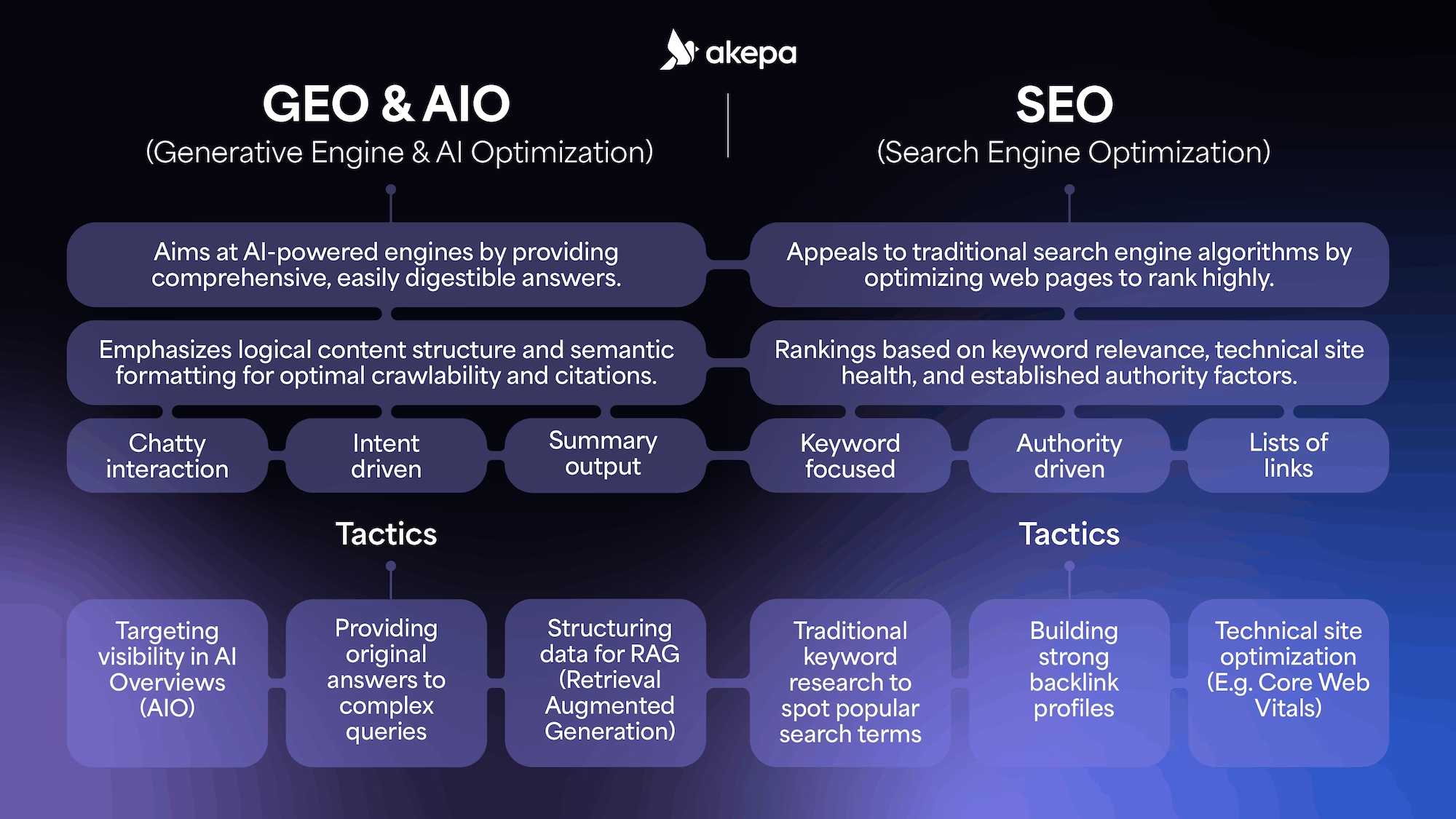
Gartner predicts that traditional search engine volume will continue to decline by 25% by the end of 2026 as users increasingly turn to AI chatbots and other virtual agents for information.
Brands that crack the secret to AI visibility will be the ones that stand out in this strange new web where AI crawlers visit your website more often than real people. Interestingly, they don’t care about your shiny web design, graphics, deep copy, and honest user reviews.
What they care about is this:
- Clear, machine-readable content.
- Verified sustainability data.
- Recognized certifications.
- Consistent information across websites and profiles.
- Citations from trusted third parties.
Your sustainable brand will thrive in the new search if you can give AI crawlers these things. There is no going back and no time to linger, and trying to kill two birds (SEO and GEO) with one stone (website). You either change and adapt rapidly or lose momentum and fall prey to your more agile and AI-native competitors.
Building authority in AI search step-by-step
Below is a complete recipe for how sustainable brands can build their authority in AI search. The recipe consists of several ingredients, each important, but only as part of a whole system.
Here is a quick tip: take the first step, perfect it, and build the next one on the success of the previous.
1. Establishing a verifiable sustainability identity
Anyone can claim they are a true sustainable brand, but not everyone can prove it. And the key to winning in the AI search is being able to stand by your words and show that your sustainability commitments are measurable.
AI systems are increasingly trained to evaluate whether a claim can be supported by evidence that exists beyond a company’s own marketing copy. If other independent and authoritative sources can vouch for you, the AI systems will be more likely to recommend your brand as sustainable in its own market niche.
The most important recommendation is to be consistent. Your website may say something. Your sustainability report, your Google Business Profile, and customer reviews should repeat the same point.
If you forget about consistency, AI systems will quickly pick up any conflicting signals, and your brand will be out of AI citations.
A verifiable sustainability identity can be built through proactive digital PR and should include:
- Publishing sustainability reports with clear metrics.
- Earning recognized certifications and standards.
- Naming experts or leadership responsible for sustainability initiatives.
- Providing transparent sourcing and supply-chain information.
- Disseminating structured data that helps search engines interpret key facts.
One very important point here is authorship. Whatever claims you make in your digital PR initiatives, whatever information you publish on your website, in blogs, or on social media, it must have a real person behind it. Copy with clear authorship sends important entity information to AI systems, which is a core principle of entity SEO for AI search.
2. Creating evidence-based content that AI can trust
One key way to prove your claims is by using evidence-based content. In AI search, persuasive copy is no longer enough, as the current AI frontier models alone can persuade you of just about anything.
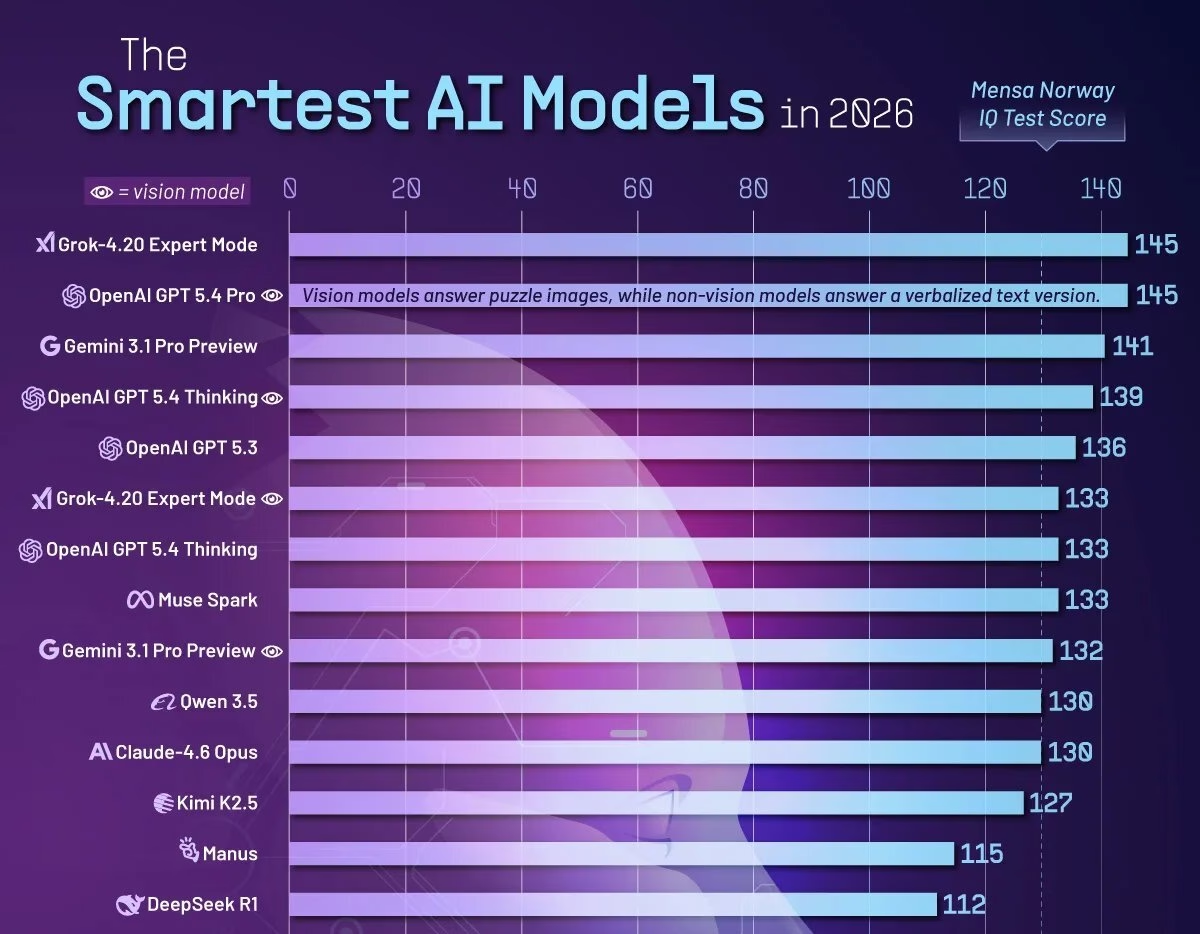
For instance, the IQ level of ChatGPT 5.3 was estimated at a level of 136. One can only speculate what the IQ level of the new 5.6 model is, as it has not been thoroughly tested as of today. Other AI models’ scores are shown below:
Unfortunately, classic sustainability pages often rely on vague statements and broad claims like “environmentally friendly,” “ethical,” “responsible”. What they lack is clear data behind those loud words.
There is an apparent gap here waiting to be closed, as 63% of consumers say they trust information from a business more when it includes transparent and verifiable evidence.
So, what should you do about it? Obviously, you need to back up your content with evidence. And in practice, strong evidence-based content usually includes:
- Specific environmental metrics (e.g., reduction of CO2 emissions).
- References to recognized standards or regulations (e.g., ISO 14001 certification or alignment with the EU Corporate Sustainability Reporting Directive (CSRD)).
- Links to original research or reports.
- Dates showing when the information was last updated.
A solid evidence-based content also usually includes a clear explanation of terms and methodologies used. AI systems will then evaluate your definitions, and if they find them clear and original, they’ll readily cite them in their replies to real people.
3. Earning mentions, citations, and topical authority signals
AI algorithms start to increasingly work like a human brain in the sense that they evaluate your content holistically. They look at not only what you state in your documents and on your page, but also at what other sources say about you. Similarly, we evaluate others by looking at their immediate environment: friends, family, and even rivals.
That is why brand mentions, citations, and authoritative references have become increasingly valuable. When respected organizations, industry publications, researchers, sustainability experts, green bloggers, and eco-conscious communities refer to your company, they create external validation that AI systems can use as a brand trust signal.
That visibility can also extend to sustainability-focused digital ecosystems, including environmental communities and search platforms such as Ecosia. While these mentions alone will not guarantee AI visibility, they can strengthen your brand’s overall sustainability footprint across the web.
Think of it as your brand’s online reputation made visible (and understandable) to machine brains.
You can earn digital authority signals through collaboration and contribution to:
- Industry publications and news outlets.
- Research and white papers.
- Conference presentations and expert panels.
- Universities, NGOs, and professional associations.
- Sustainability reports and market studies.
Note that not all these signals are traditional backlinks. You cannot force citations via brute force, i.e., with mass acquisition of backlinks. On the contrary, such an aggressive tactic will likely be treated by a smart AI system as spam and filtered out from its recommendations.
The bottom line: A brand that is frequently discussed by credible sources can develop a stronger topical authority profile even when the number of direct links is modest.
4. Encourage customer reviews on third-party platforms
On the external front, there is one more thing that you can do to drive authority—encourage customer reviews.
Reviews on independent, usually third-party platforms create a valuable layer of external validation. Unlike content on your own website, third-party reviews are generally perceived as harder to control, which makes them useful trust signals for AI systems.
Some of the most respected customer review platforms include:
- Google Business Profile;
- Trustpilot;
- Yelp;
- Industry-specific review sites (e.g., G2 or Houzz);
- Marketplace review systems (e.g, Amazon, eBay, Walmart, etc.).
Your goal is not to create as many simple and identical reviews. In fact, those will not do your brand much good and most likely will be flagged by AI systems as spam.
The goal is to encourage honest, detailed, and unique reviews. For example, a detailed review such as “The company shipped my order in plastic-free packaging and provided clear information about material sourcing” carries far more value than a simple “Great product!”
Responding to customer reviews is another important tactic. Whenever you notice an outright negative or positive review, respond to it with a true desire to help, or just say thank you.
5. Optimizing content for AI retrieval and citation
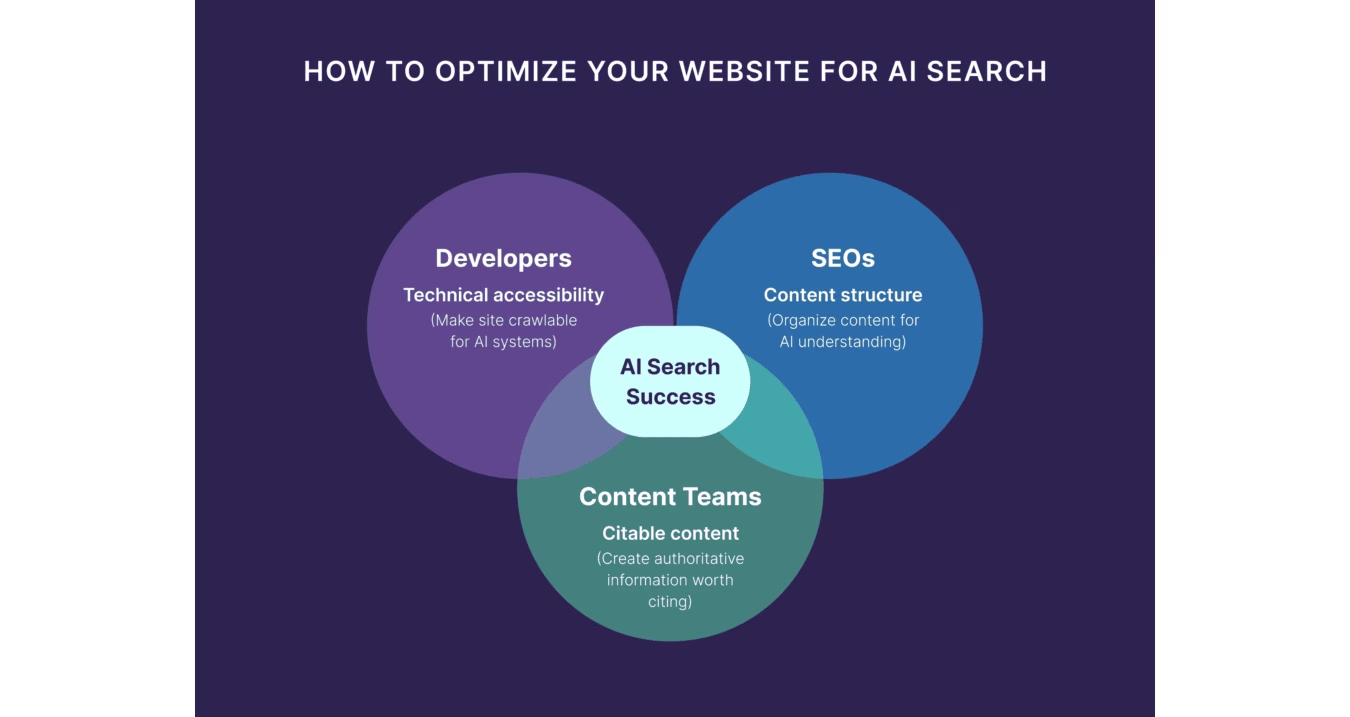
AI crawlers don’t care much about the design of your pages, which colors you use, or how persuasive your copy is. What they care about is structure and clarity.
AI systems will be more likely to retrieve and cite your content that is presented clearly, organized logically, and supported by machine-readable signals. You should use a simple structure across your pages, place the essence at the beginning of each page (heading, sentence, paragraph), and directly answer nascent sustainability questions.
An easily retrievable content also means that you mustn’t hide it behind passwords and form completion, i.e., what is known as gated content. AI bots won’t fill in your forms and leave their email addresses in exchange for valuable information like humans used to. They’ll simply bounce and abandon your website.
To further improve the retrieval of your content, follow these practices:
- Use descriptive headings that clearly state the topic.
- Place important statistics near the beginning of a section.
- Add concise answer blocks for common sustainability questions.
- Implement structured data for articles, organizations, and products.
- Keep pages fast (Response Rate) and easy to crawl.
A useful test is to ask whether someone could understand your main point after reading only the heading and the first two sentences. If the answer is yes, AI systems are also more likely to identify the section as a relevant citation candidate.
For example, a heading such as “How our company reduced packaging waste by 18% in 2025” is far more informative than “Our sustainability journey.” The first tells both readers and AI exactly what the section contains.
How to strengthen AI-search authority over time
The next few years should reward brands that can remain trustworthy while the web is flooded with so-called ‘slop’ made with AI. As the name implies, that content will be generic and unoriginal, and so abundant that AI systems themselves will struggle to find authentic data made by real human experts.
Nevertheless, AI systems shouldn’t have any problems distinguishing fluff from original ideas – especially as they get cleverer. Similar to how modern AI detectors can detect AI-made texts, so will the AI search algorithms of the near future crack recycled slop and reward unique insights.
And we must also consider AI agents, who’ll perform research on behalf of users. Instead of searching through an endless list of blue links (why did you ever do that, dad!?), a user may ask an agent to compare sustainable packaging suppliers or evaluate the environmental impact of a product category. The agent will prioritize sources that have a history of accuracy, consistency, and independent verification.
Against that vaguely dystopian backdrop, to strengthen brand authority over time, focus on trust signals that are difficult to fake:
- Publish original data rather than summaries of other sources.
- Don’t be frightened to show an opinion, especially one grounded in real data.
- Update sustainability metrics on a regular basis.
- Create content that’s grounded in human experience and emotion (e.g. examples and wit).
- Correct outdated information publicly.
- Build relationships with credible researchers, NGOs, and industry bodies.
In times when the truth is becoming ersatz, the safest strategy for sustainable brands will be transparency of the highest order. Make all the information about your brand accessible and allow others to scrutinize it. If you can win the trust of humans, machines’ trust will follow.




Leave a Reply