


Local search doesn’t behave like global search. People type differently when they seek something nearby – shorter queries, more urgency, a bit of dialect creeps in.
Someone searching “organic supermarket open now” in Manchester isn’t prioritising a fancy brand story, they want an address, a rating – and a route to get there. Yet most content strategies get built top-down: global keywords, global page, witty hero lines, then a pinch of local flavor hastily sprinkled at the end like a garnish. A bottom-up approach is wiser. The strategy should start local and build from there, not the other way round, a bit like sustainable impact itself.
Here are some ways to help your local search strategy make more impact.
Location as a ranking signal
Search engines already treat location as a ranking signal, not an afterthought, because “near me” and “open now” queries are blowing up on mobile. If your content strategy ignores that movement, you’re optimizing for a version of search that barely exists anymore. Global content built without tailoring to local needs, tends to read generically and it ranks accordingly because it says nothing to anyone in particular. Compare that to a page that names the actual neighborhood, references local initiatives or impacts, and uses the phrasing locals actually use. These are the kinds of pages you should be building.
Scale vs. locality – the core tension
When creating local pages, there’s a tricky balance to strike. Scale demands consistency but locality demands variation. Yet, you can’t write five hundred unique city pages by hand and expect quality to hold. So the strategy needs a spine – a core message – but with flexible limbs.
Our tips are to start with local modifiers on-page, local testimonials, local schema markup, local images. And off-page, build multilingual backlinks that drive global traffic. That’s the piece people forget – they localize content but keep the off-site approach monolingual or monoregional, which limits visibility in important regions where customers are.
Language isn’t literal translation
Language matters more than most SEO teams admit. Not just translation – localization. In Spanish language folk searching for greenwashing do seek using the literal translation ‘lavado verde’ but they also use the English, ‘greenwashing’ even more often – and a term that ranks in Spain might flop in Mexico; same language, different intent.
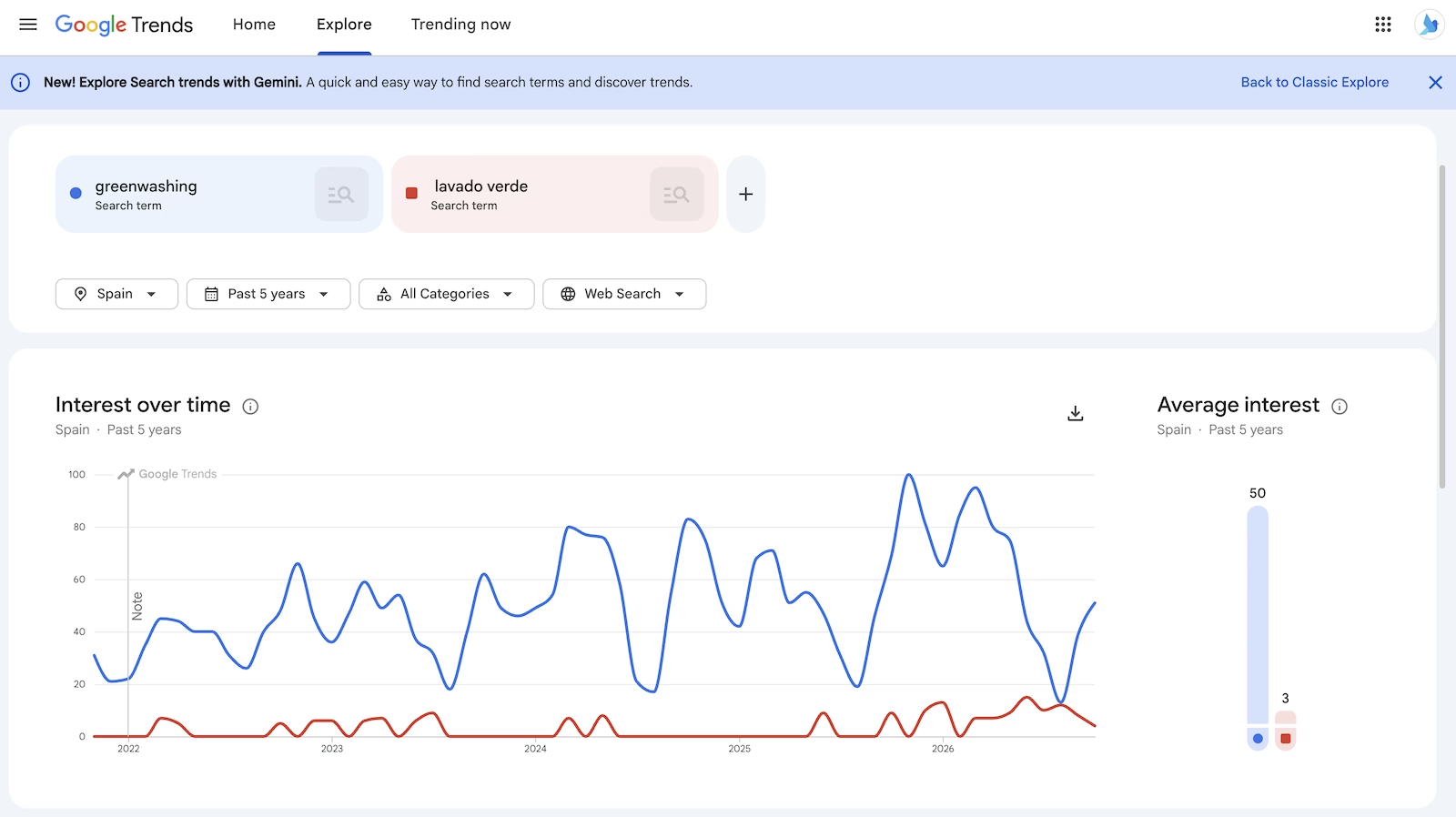
Direct translation might kill nuance but it kills search volume too, sometimes literally zero volume on the “correct” translated term while the colloquial version gets thousands of searches. So keyword research has to happen per market, not once globally then pasted across regions with a translation layer slapped on top.
The technical layer: Hreflang and indexing
There’s also the technical side, which is less glamorous but decides whether any of this even gets indexed right. Hreflang tags, done wrong, cause duplicate content fights between your own pages. Done right, they tell Google exactly which version serves which audience. These fiddly technical details are behind huge downstream effects. Miss them and your elegantly localized French page competes against your Canadian French page for the same rankings – self-sabotage, basically.
One content, many expectations
Content teams love efficiency. Write once, deploy everywhere – the dream. But local search shatters that dream to smithereens. A US audience wants directness, quick answers, maybe a bit of humor. A German audience often wants precision, structure, less fluff, and utter specifics on your supply chain or materials. The same product needs a fairly different content shape. Ignore this and conversion rates tell the story – CTR lower, bounce rate awful, and other painful metrics.
Trust signals aren’t universal
And there’s a cultural layer too, one that’s easy to underplay. Trust signals differ by region. Reviews matter more in some markets, third-party eco-certifications (like B Corp or local organic standards) more in others, price transparency more elsewhere. In sustainability there are also laws to consider that influence what you can say.
A global content strategy that treats trust as universal is going to underperform in at least half its markets. You might even end up in court, somewhere or other. There’s no way around it – you research per region or you guess, and guessing gets you in trouble.
Budget follows intent, not convenience
Budget allocation follows from all this, awkwardly. It seems desirable to have one global campaign, one number to report. But if local intent diverges this much, spend has to diverge too. More budget toward local campaigns in markets where organic competition is fierce; less toward paid where organic local trust already exists.
Mobile changes the math further. Local queries skew heavily mobile – someone walking, someone on public transport, someone half paying attention. Content built for desktop reading patterns, long paragraphs, dense explanation – it just doesn’t survive that context. Local content needs to answer fast, then expand for those who stay. Built for skimming first, with some depths underneath for those who want to explore. Global evergreen content can afford to be denser upfront; local intent content can’t.
Beyond city pages: local signals inside global content
One thing that gets missed constantly: local content isn’t just city pages. It’s also localized examples inside otherwise global content – a case study referencing a specific region’s recycling infrastructure, a stat pulled from local government climate data instead of a generic global figure. These are small swaps but they signal relevance in a way generic phrasing never does. Readers notice, even if they can’t articulate why a page feels made for them.
What stays fixed, what flexes
None of this means abandoning global consistency. Brand voice, core positioning, impact commitments – those attributes should hold everywhere – otherwise you’re not one brand, you’re a vaudeville of fragmented ones. The trick is separating what must stay fixed from what must flex. Fixed: values, quality bar, core message. Flexible: language, examples, keyword targeting, link strategy, trust signals, format.
Get that delineation wrong and you either dilute the brand chasing local relevance, or you stay so global that no local market feels seen. Get it right and you’ll grow – local community feeds global authority, making each new local market easier to enter. That’s the payoff. It’s not neat, nor symmetrical, but it works if the foundation respects how people actually search where they stand and head to.




Leave a Reply