


People may be sick of travelling to the best spots – and finding the impersonal swarms of tourists, armed with selfie sticks and cringe poses.
But the planet is also fatigued by folk travelling to its top destinations. Tourism is responsible for around 8% of the world’s carbon emissions – with emissions from tourism-related transport expected to rise massively by 2030.
Travel doesn’t have to be so harsh on the planet. There are fairly simple ways to make it more sustainable. So ahead of this summer season, we’re going to look at some practical ways to travel more consciously and reduce your emissions.
👣 Destinations: Local adventures
Faraway, paradisiacal islands can be tempting to visit but most travellers are guilty of overlooking attractions close to home because the exotic is more of a rush. Distant means better; a once-in-a-lifetime adventure.
Yet, there are often wonderful places to visit on your back door. Akepa is based in Barcelona, Spain. We could travel to Hawaii and it would be sensational. Then again, we could also travel to The Azores, in the Atlantic near Portugal, which are just as epic and otherworldly – with very few crowds. We could visit the Maldives but the azure waters of the smallest Balearic island, Formentera, are comparably crystalline. Instead of Surakarta we could take a far shorter flight to Fez. And so on.
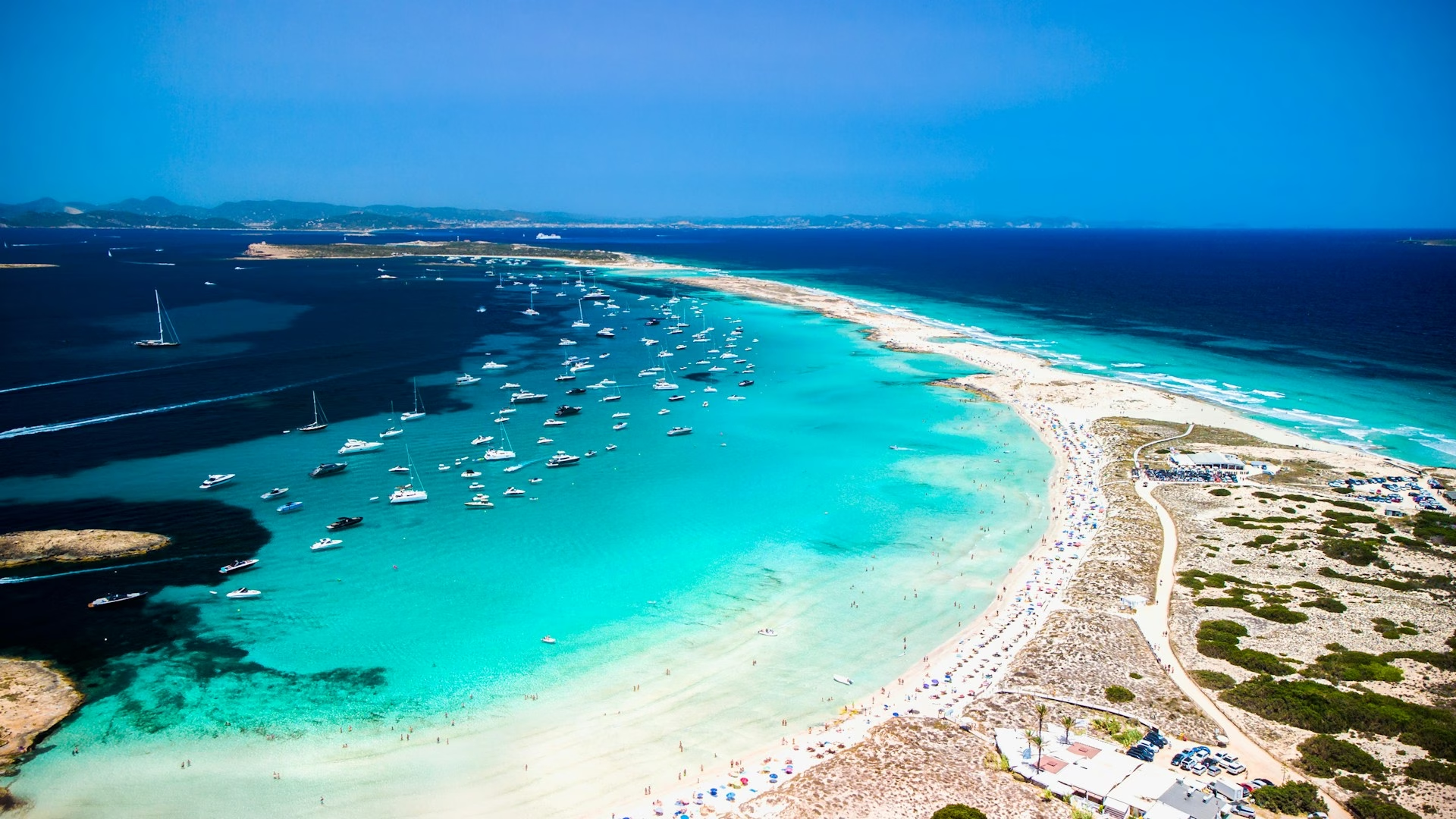
That’s not to say it isn’t worth aiming at bucket list destinations and enriching experiences in far-flung continents. Just, if you’d like to reduce your impact then you could do those long voyages less often. With aviation accounting for up to 5% of global warming – travelling locally is an impactful way to spend less money and emit less CO2.
🏨 Booking: Go direct
The first connection most people make with sustainable tourism is the environment but sustainability is also socio-economic. In many popular destinations, particularly those in developing countries, up to 80% of tourism revenue leaves the local economy. This leakage is because travellers book through international aggregators, stay in foreign-owned hotel chains, and eat at global franchises. The local economy ends up not benefitting economically from the visitors, while putting up with the disruptive downsides like noise, pollution, housing issues, and crowds.
Whenever you can, book directly with locally-owned guesthouses and hire independent local guides rather than using massive tour companies. These small actions can help make sure that the money from tourism benefits the local communities, not just global behemoths like Booking.com or Airbnb. You’ll also lower your carbon footprint by supporting local supply chains.
🚅 Transport: Travel by train
How you get there matters just as much as where you go. Taking a train instead of a short-haul flight can be far more soothing but it can also slash your transit carbon footprint by up to 90%. Europe and parts of Asia have incredible, high-speed rail networks that often drop you right in the city center, meaning no expensive or stressful airport transfers. It often surprises people to learn that the planet’s largest high-speed rail network outside of China is where we are, in Spain.
If you absolutely must fly, opt for direct routes (since airplanes burn the most fuel during takeoff and landing) and stick to economy class. A business class seat takes up a lot more physical space, meaning its carbon footprint per passenger is significantly higher. And whatever mode of transport you choose, pack light! Every extra kilogram of luggage requires more fuel to move.
📱 Devices: Avoid temporary plastic
Sustainable travel should be synonymous with avoiding single-use plastic. The most obvious form of this pollutive material is water bottles but an overlooked manifestation is the devices we travel with, and we’d be lost without.
Instead of arriving at an airport and immediately buying a temporary physical SIM card (resplendent with plastic packaging and that little metal ejector pin that vanishes instantly), switch to an eSIM. Traditional physical SIM cards contain silicon and trace metals that make them a nightmare to recycle, meaning almost all of them end up in a landfill after a two-week holiday. Or they end up in the lovely ocean you’ve been snorkelling in, leaking microplastics. With over 4 billion SIM cards manufactured every year, that becomes a huge collective problem.
By downloading a reliable travel eSIM before you fly, you completely eliminate single-use plastic, e-waste, and the hidden carbon footprint of manufacturing and shipping physical cards around the world. Plus, it’s vastly more convenient – you connect to local data the moment you land, bypassing those vile airport kiosk queues entirely.
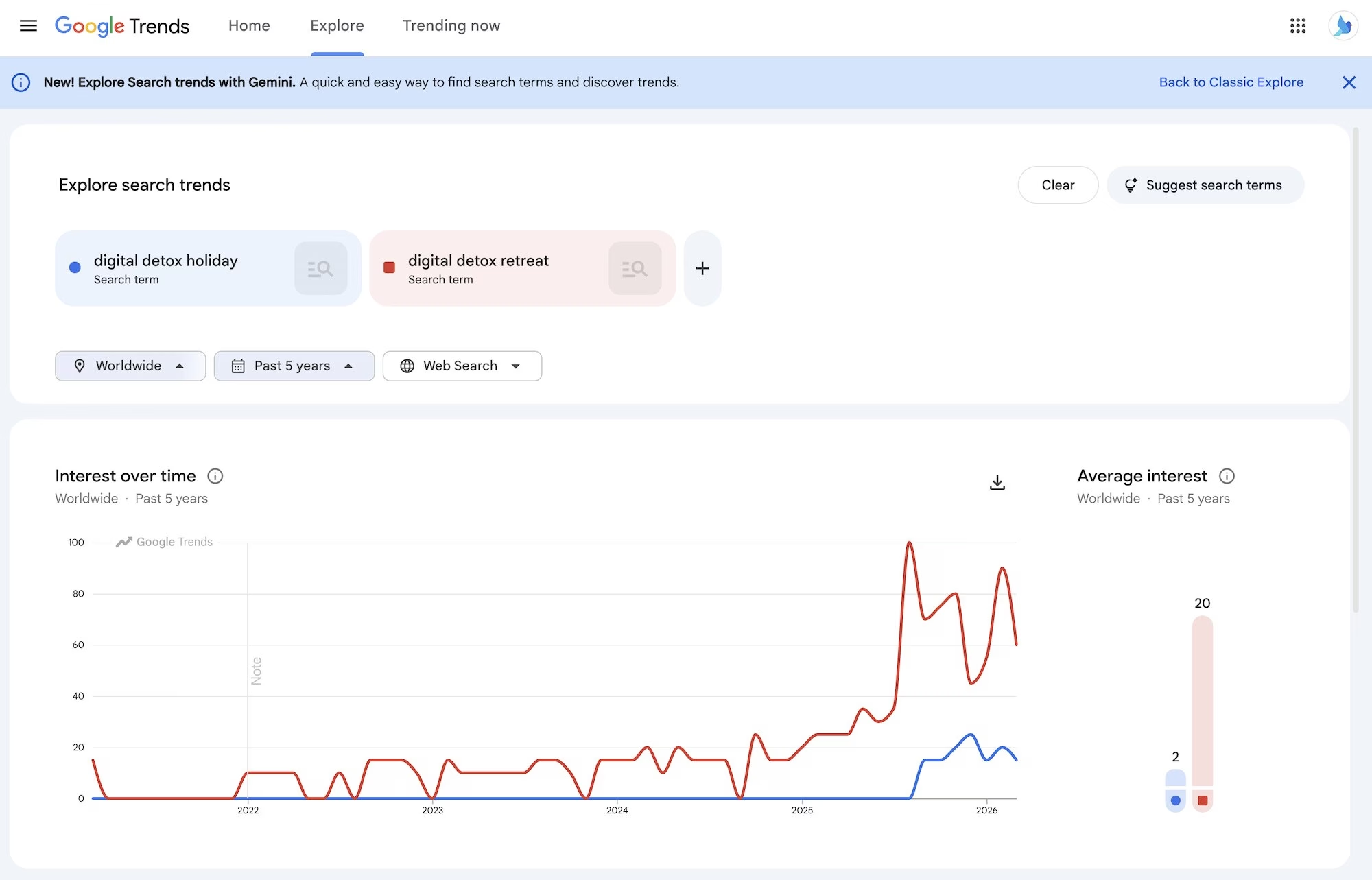
Alternatively, you could skip devices completely and opt for a digital detox. An increasing number of providers are offering such retreats to help frazzled travellers disconnect.
🌶 Food: Eat for the ecosystem
Food is a major hidden contributor to a trip’s environmental footprint. Ingredients flown in from across the world (“food miles”) and high meat consumption rapidly drive up greenhouse gas emissions.
To eat more sustainably, focus on local, seasonal, and plant-based foods. Dining at independent, genuinely ‘farm-to-table’ restaurants supports the local economy and cuts down the carbon footprint of your meal. And here’s a refreshingly simple one: take the time to sit down and enjoy your food at a local spot rather than ordering takeout. This immediately cuts out the single-use plastic containers, bags, and cutlery that plague popular tourist zones. You might make some new friends too, which is what travelling is all about.

🛖 Accommodation: Choose eco-friendly lodgings
Hotels are massive consumers of energy and water but finding a truly sustainable place to stay means looking past superficial “eco” vibes. We’re all familiar with those little placards in hotel bathrooms asking you to reuse your towel to “save the planet” – which is often just a sneaky way for giant hotel chains to save on their own housekeeping costs without making any systemic environmental changes.
This is a classic example of greenwashing. When booking, look for accommodations with verifiable certifications or independent boutique hotels that invest in renewable energy, water conservation, and the local community.
Selecting somewhere ‘sustainable’ isn’t as straightforward as it should be though, so here are a few tips:
- Learn what the credible certifications are – and look for them.
- The more independent the resort, the better. Large chains rarely operate in a truly sustainable way.
- A hotel website should contain specific details about what the resort does – not platitudes about the planet and so on.
- These days, mentions of circularity and biodiversity are important and a reassuring sign.
- Any resort that says it treats the planet well should also treat its people well.
For more on how to spot the fakes, check out our guide on greenwashing in tourism and how to avoid it.
🔥 Fires: Avoid fiery regions
A final yet indispensable footnote is to avoid regions that are increasingly afflicted by serious wildfires. By not visiting these regions you’ll be doing your vitality a favour, while also placing less strain on critical resources to deal with the incidents.
Fires are a natural part of the ecosystem, they fertilise and renew as well as destroy, but lately they’ve been getting out of hand. And in Europe, which is responsible for over 50% of all global tourist arrivals, temperatures are warming at twice the global average. Europe is the fastest warming inhabited continent – only second to Antartica.
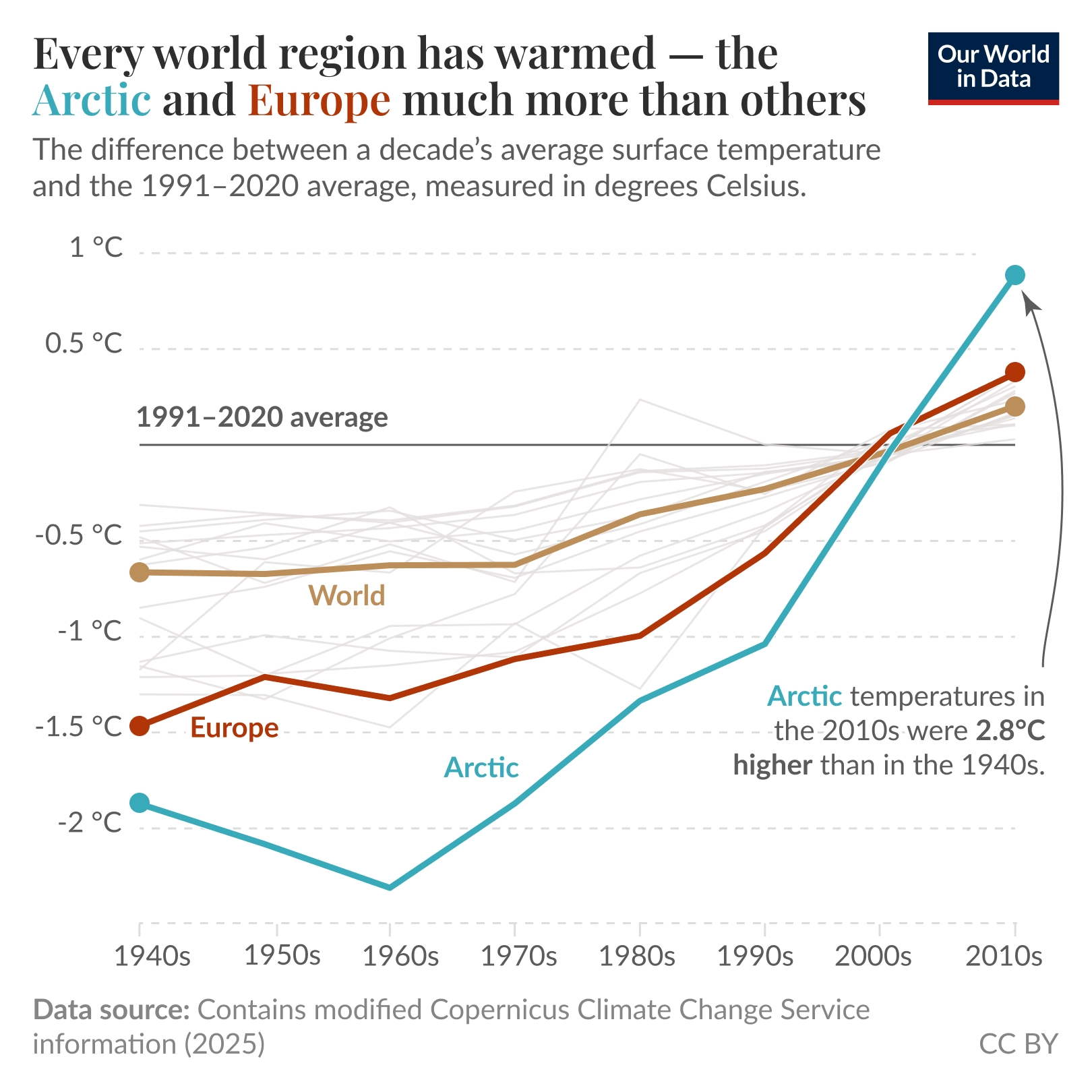
Naturally, this means fires are getting worse and they’re ravaging southern Europe, which is the continent’s driest and hottest region. So far this year, there have been serious fires in popular hotspots like Spain, France, Greece, and Croatia. Many tourists have had their trips completely ruined but it’s also more threatening than devastated vacations. In the southern Spanish province of Almeria, foreign visitors and expatriates were among 13 people killed.
Each year, sadly this situation is set to get worse so avoid high-risk areas and seasons. You’ll be doing everyone a good turn. Relaxing or enriching trips are not compatible with perilous wildfires.
Remember, there’s only so much you can do!
This post is about making personal changes and if you care about the future then why not do that? Still, it’s worth remembering that to avoid the worst effects of climate change, individual choices can have limited impact and we need systemic changes – especially in relation to burning fossil fuels for energy. In fact, the whole idea of a ‘carbon footprint’ was originally a PR creation of Big Oil to sneakily pass the responsibility from massive chimneys onto little legs.
At Akepa, we believe that mindful personal choices are important; they’re admirable, and the world needs kinder behaviour from its humans. But remember to not take all of this so painfully seriously when travelling and let it ruin the experience. Like we said, a more sustainable future is about way more than your travel choices. It’d be a shame if you let that get you down when zipping around.
Do your best and Bon Voyage!




Leave a Reply